
Last updated:
Our Taipei Design Center and Suzhou R&D team develop these technologies end-to-end. Every anti-fog formulation, gasket profile, lens curvature, mirror coating, and buckle originates inside Eyeline or gets validated inside Eyeline. The technology stack is built as one system tuned for OEM and ODM partners — not stitched together from off-the-shelf parts.
Super-Hydrophilic Anti-Fog Coating
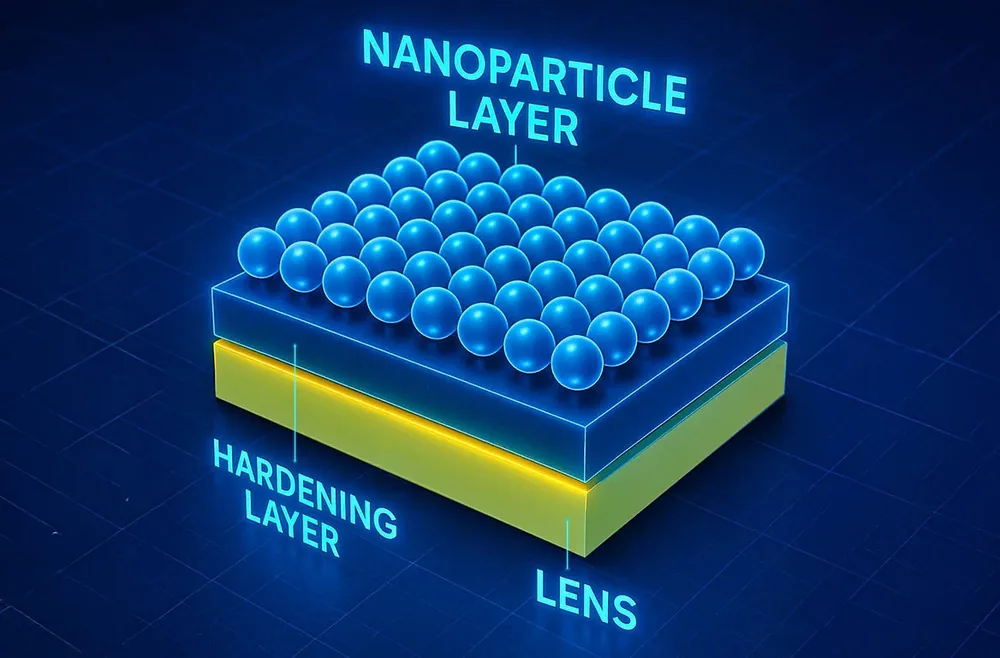
Our anti-fog coating is developed and applied on a dedicated in-house line. A nano-embedding process bonds the anti-fog particles into the hardened lens surface, so water sheets across the lens instead of beading into fog. In our 75-cycle internal test, vision stays clear from set one through set seventy-five.
- •Doesn't wash off – The particles are embedded into the lens, not coated on top.
- •Adds lens hardness – Survives repeated wiping with a microfiber.
- •Resets with water – A rinse and a gentle rub bring the anti-fog back.
- •Water-based formulation – VOC-free, no harmful residues.
3D Sculpted Gaskets
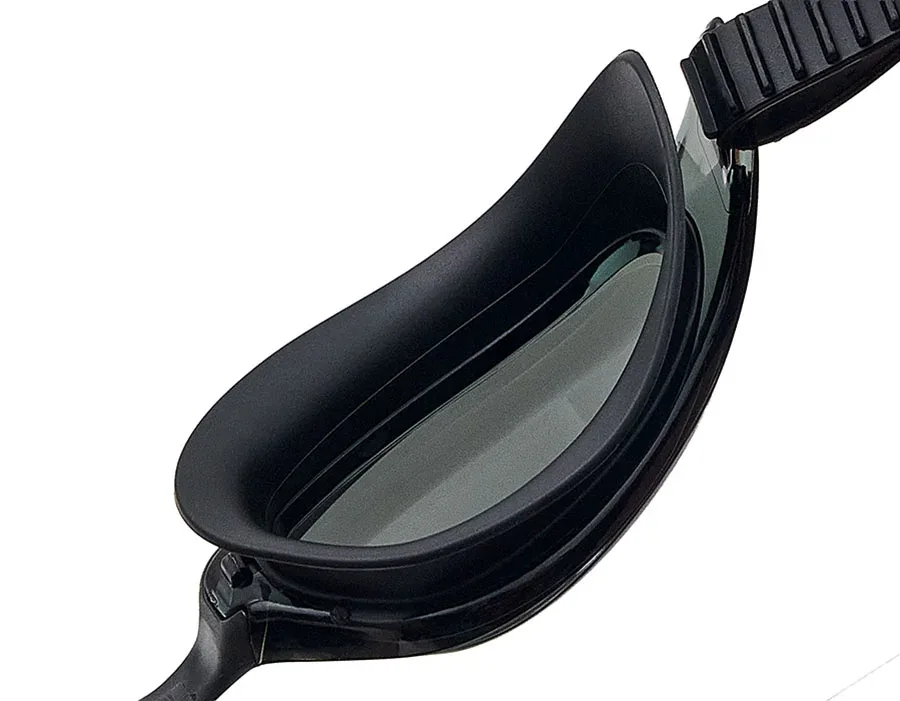
Our gasket library is built from thousands of 3D facial scans, weighted across Asian and Western face geometries. Each geometry is shaped to spread pressure evenly across the orbital bone instead of concentrating it on two or three contact points. The result: no red rings after a long set.
The TPE we use is 40 Shore A — soft enough that the gasket conforms to facial contours without leaving pressure marks, firm enough to hold a watertight seal through a flip turn. The same gasket library lets brands swap region-specific fit profiles in or out without retooling the lens or strap — one product line, multiple markets.
- •L-profile gaskets sit closer to the face — lower drag, less water turbulence at the seal, and a more stable seat that resists shifting on a fast push-off or turn. The go-to for racing swim goggles and performance training.
- •C-profile gaskets sit deeper and softer, with more cushion — built for long fitness sessions and squad training where comfort beats drag.
Wide Vision Swimming Goggles
Curved lenses usually trade peripheral vision for distortion at the edges. Ours don't. The geometry holds optically clean from center to edge — the swimmer keeps a wide, undistorted view across the whole field.
In practice that means less headaches and dizziness, easier sighting in open water, faster spatial reads off the wall in a turn, and less head movement looking for the lane line. The view feels like it should.
Quick-Adjust Headband System
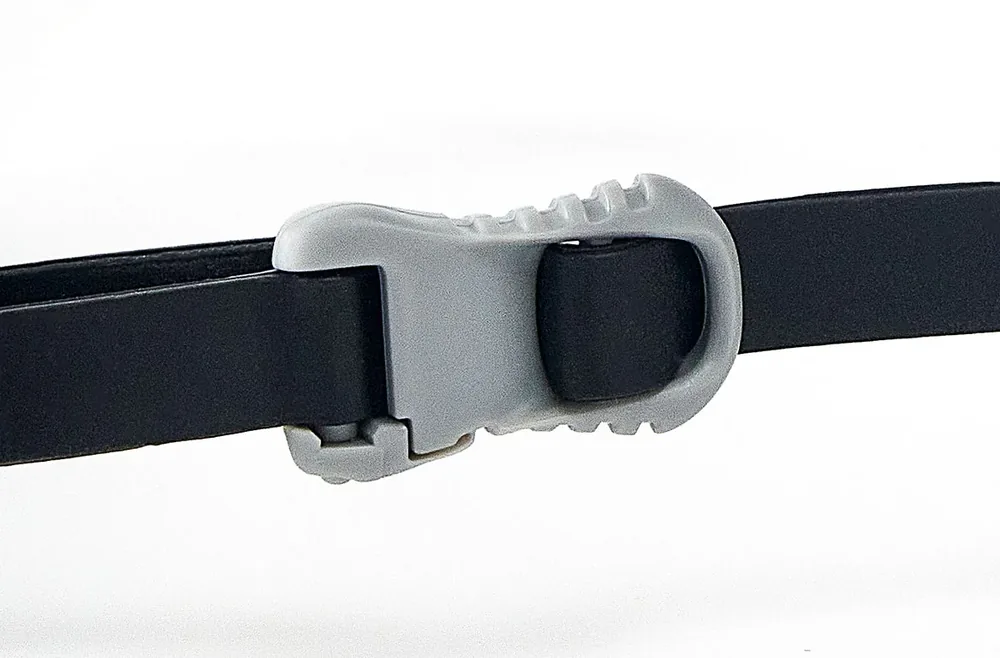
Our quick-adjust headband fits in seconds. The buckle is low-profile and one-handed — pull tighter mid-set without breaking stroke, or loosen it after the set without taking the swim goggles off.
- •Adjust without stopping – Pull tension tighter or looser mid-set.
- •Locks where you set it – Holds through dives, flip turns, and starts.
- •Low-profile – Sits flat to the head; nothing to catch on a cap.
Superior Mirror Coating
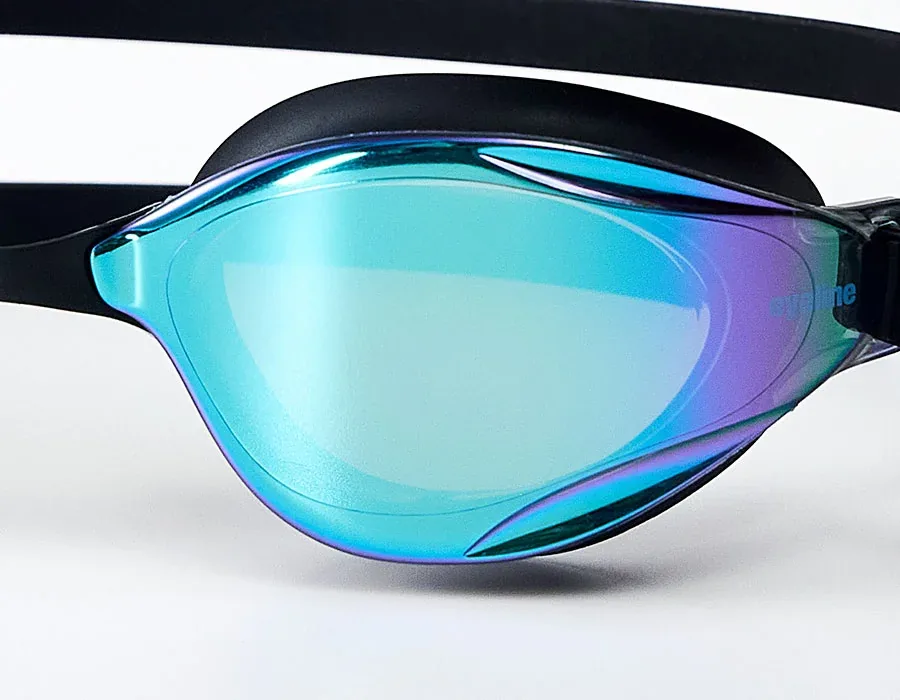
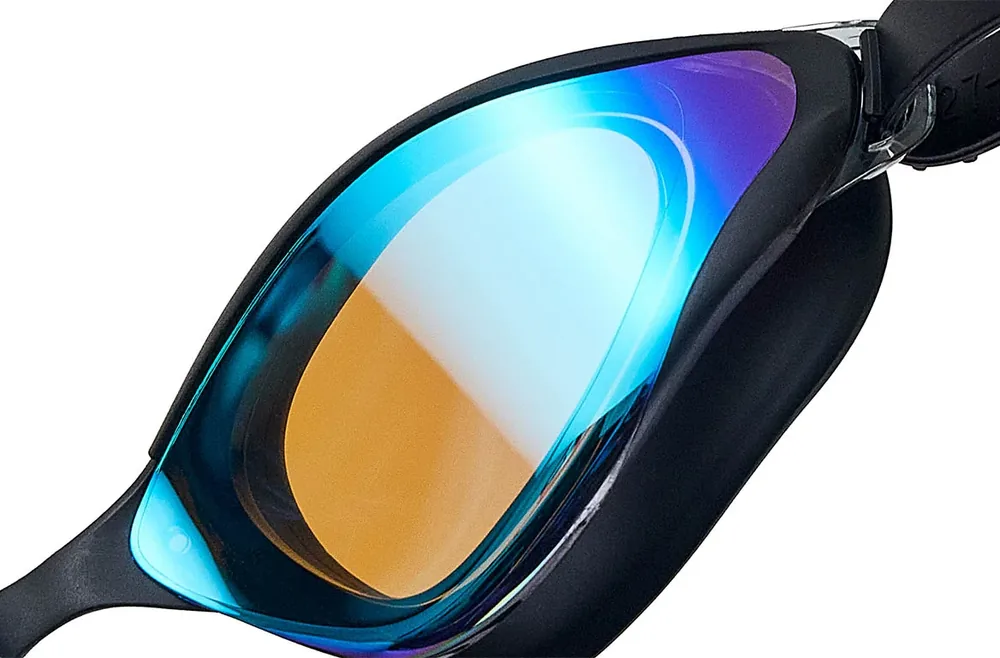
Our mirror coating is developed and applied in our own coating line — not subcontracted to a third party, which is rare for the size we run. It reflects glare and excess sunlight on the surface, while preserving balanced underwater vision when the swimmer looks down.
The result is reliable optical performance and long-lasting protection for training and competition.
- •Glare reduction – Outdoor pool, midday sun, no squinting.
- •Optical clarity – Undistorted vision through precise coating thickness control.
- •Durable – Strong adhesion under repeated lens wiping; minimal scratching.
- •Consistent – Same coating density, batch to batch, lot to lot.
OEM & ODM Programs Designed In-House

Every Eyeline product — racing, training, fitness, junior, optical, triathlon — is designed in our Taipei Design Center and engineered into production in our Suzhou factory. The structures, features, and coatings are ours; many are patented. See the Design Process for the full development workflow.
Frequently Asked Questions
What's distinctive about Eyeline's lens technology?
Five things set the lenses apart:
• Curved lens geometry — close to 180° field of view with no edge distortion • Japanese all-electric injection machines for the lens molding step — they hold tighter tolerances than hydraulic machines, which matters for optical consistency batch to batch • In-house PVD mirror coating — we run our own coating line in Suzhou rather than subcontracting it out, which lets us control quality reliability and protect coating chemistry • Color matching to current ISO swim goggle lens-tint standards, so the lens looks the same across production runs • Over-molding the lens into the frame rather than gluing or snap-fitting, which is stronger and lets us pull the frame in closer to the face
What makes Eyeline's wide-angle swim goggles different?
The difference is the lens geometry. Most swim goggles use flat lenses, which inherently limit peripheral vision; ours are curved, which opens up the field of view to close to 180°.
What you get with a curved lens:
• Roughly 180° field of view, including good peripheral vision in your forward arc • No edge distortion — the curve is computed so the optical axis stays straight from center to edge • Easier sighting in open water and easier awareness of other swimmers in a busy lane
The reason most manufacturers stick with flat lenses is that curved lenses are harder to make. The injection mold has to hold tighter tolerances, and the coating step (anti-fog, mirror) has to work on a compound curve rather than a flat plane. We've been refining our curved-lens tooling for over a decade.
Do you make corrective lens (optical) swim goggles? How do they differ visually from standard swim goggles?
Yes. We make corrective lens (optical) swim goggles in two models. The only visible difference from a standard swim goggle is the lens area right in front of the eye — for accurate dioptre power, that area has to be flat rather than curved. From the outside, the difference is hard to spot.
The rest of the swim goggle — gasket, frame, strap, anti-fog — is identical to our standard catalog. Corrective lens buyers get the same fit and the same anti-fog spec as everyone else.
What anti-fog options does Eyeline offer?
Two options, depending on how heavily the swim goggles will be used:
• FSI Anti-Fog — a US-developed anti-fog coating, well-proven on everyday training and recreation use • Nano Anti-Fog — our own coating, developed in-house. Lasts more than twice as long as FSI in our internal tests. Reactivates with a light swipe across the inside of the lens before each swim
Both pass our internal anti-fog cycle tests. Full comparison data is available on request — useful if you're speccing a high-volume program and want to make a build-cost vs. lifetime trade-off.
Related
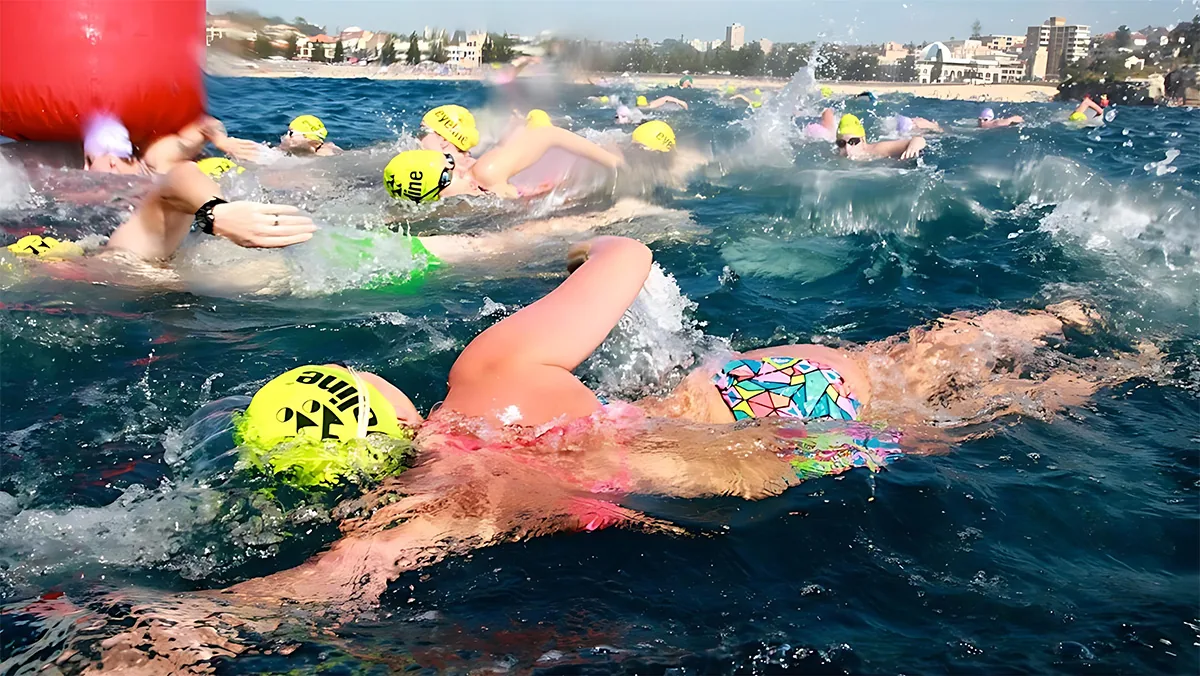
Buyer's guide
Types of swim goggles, explained
Ten categories — racing, training, fitness, kids, masks, more.
Learn More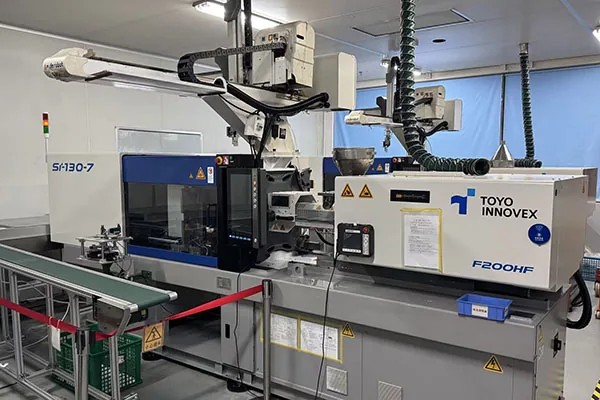
Manufacturing
How swim goggles are made
Lens injection, gasket bonding, anti-fog, final QC.
Learn More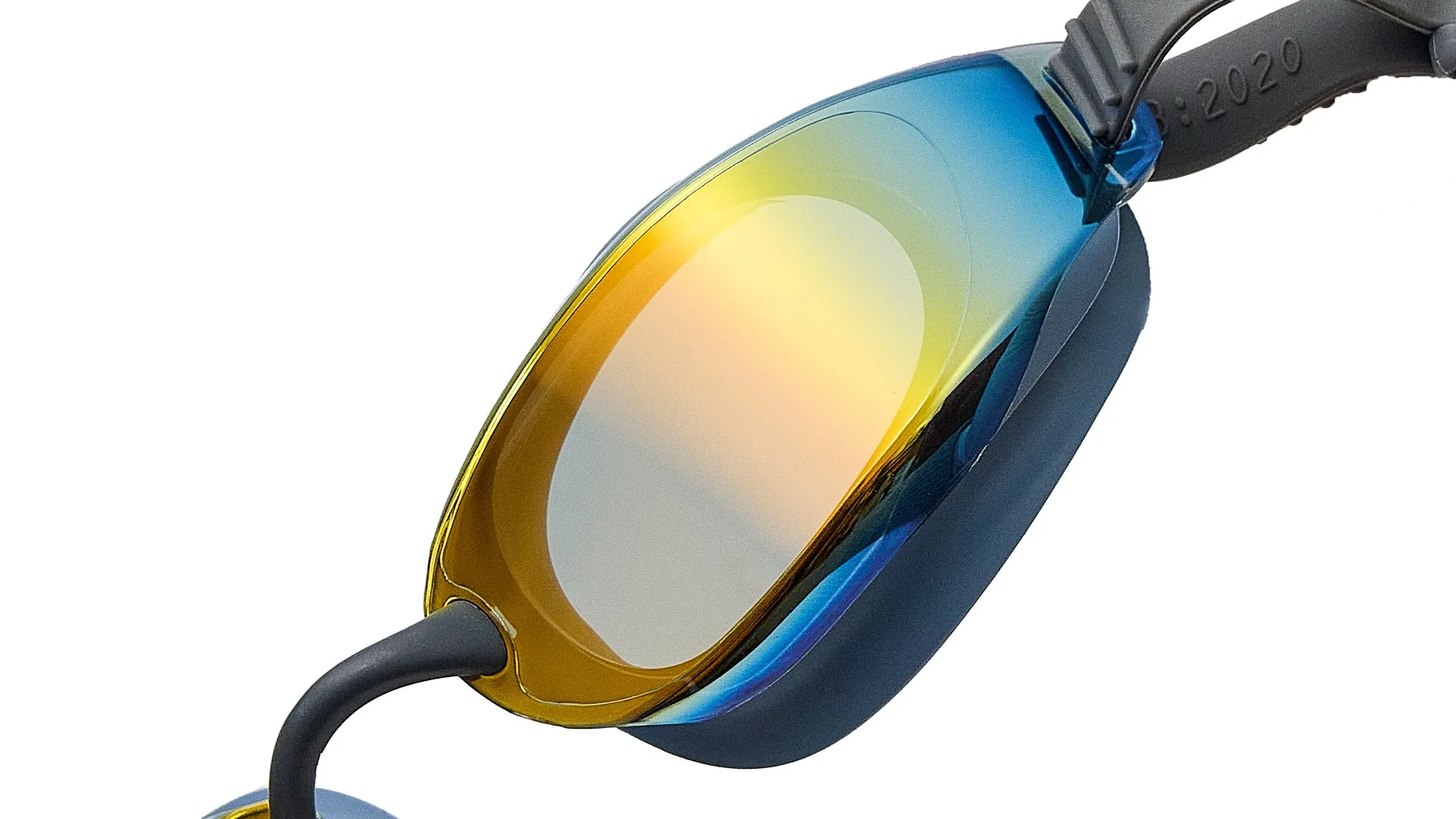
Sourcing
OEM vs ODM vs private label
Which manufacturing model fits your brand.
Learn More
About
Inside our swimming goggle factory
Six decades of heritage, from Melbourne 1963 to our Suzhou factory.
Learn More
Design
Five-stage product design process
From design brief through pilot run.
Learn More
Compliance
Certifications and quality systems
ISO 9001, CE, FDA, ISO 18527-3.
Learn More
FAQ
Manufacturing FAQ
Lead times, MOQ, payment, IP, and more.
Learn More