What “UV Protection” on a Swim Goggle Actually Means, and What It Takes to Put It on the Carton
UV400 is a marketing term, not a goggle standard. What ISO 18527-3 limits, why polycarbonate stops near 380 nm, and what to file before printing a UV claim.
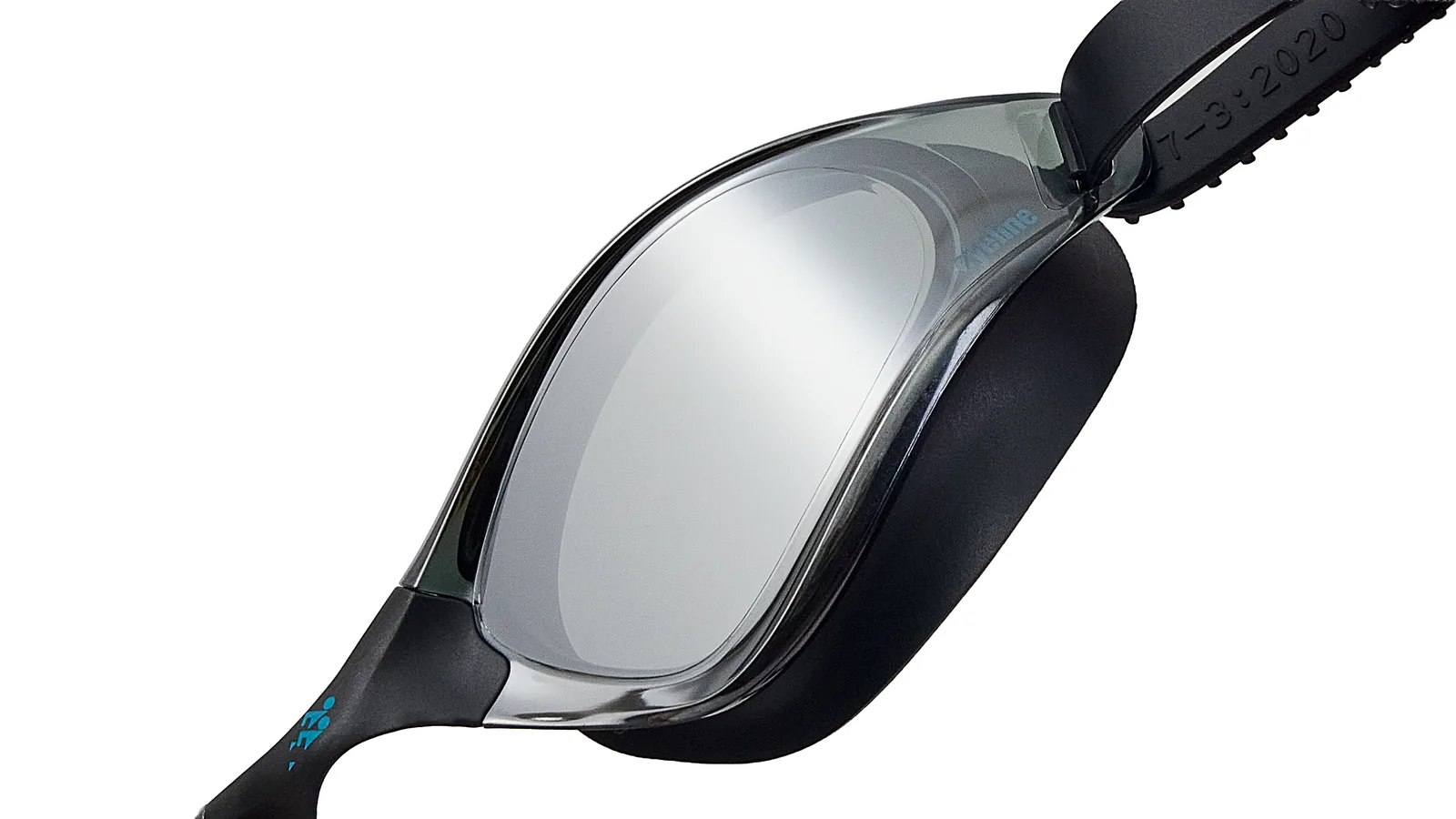
“UV400” on a swim goggle carton is a marketing description, not a test standard. It means the lens transmits close to nothing up to 400 nm, and no swim goggle standard defines or tests for it. The standard that does govern a swim goggle’s UV performance, ISO 18527-3, sets three limits relative to how much visible light the lens lets through, so a clear indoor lens may transmit far more UV than a dark outdoor one. Optical polycarbonate absorbs UV on its own up to roughly 380 nm, which covers UV-B and most of UV-A at no cost. The last stretch, from 380 to 400 nm, takes a UV absorber compounded into the resin, or an absorbing tint or coating, and each of those changes the color and the transmittance you have to measure again. A defensible UV claim rests on a spectral transmittance report on the exact lens you ship, per colorway and coating state, not on a phrase on the sleeve.
This article is for the brand product manager or sourcing lead who signs off packaging artwork. It covers where UV400 comes from, what ISO 18527-3 requires, how the number is measured, why it drifts in production, and what should be on file before the carton goes to print.
What “UV400” actually means, and who defines it
The term comes from sunglasses. The international sunglasses standard, ISO 12312-1, defines the ultraviolet range as ending at 380 nm. The Australian and New Zealand standard, AS/NZS 1067.1, extends it to 400 nm, because the 380 to 400 nm band carries a meaningful share of the solar UV that reaches the eye. “UV400” grew up in that gap as shorthand for a lens that blocks the whole band to 400 nm, and has since spread to any product with a lens.
Two things follow. No conformity assessment stands behind the phrase: a lens can carry it on the basis of a lab report, a resin datasheet, or nothing. And the phrase is stricter than most people assume. Taken literally, it means the lens is close to opaque from 280 to 400 nm, a tighter requirement than either the sunglasses standard or the swim goggle standard imposes on a clear lens.
Why polycarbonate gets you most of the way, and where it stops
Nearly every swim goggle lens is injection-molded optical polycarbonate, an inherent UV absorber. Ophthalmic lens references put its cutoff at about 380 nm; resin patents describe conventional polycarbonate as unable to absorb beyond roughly 375 nm on its own. So a clear, uncoated polycarbonate lens already stops UV-B (280 to 315 nm) and most of UV-A (315 to 380 nm) with no additive. That is why almost every polycarbonate goggle can truthfully claim UV-A and UV-B protection, and why the claim alone tells a buyer almost nothing about the factory.
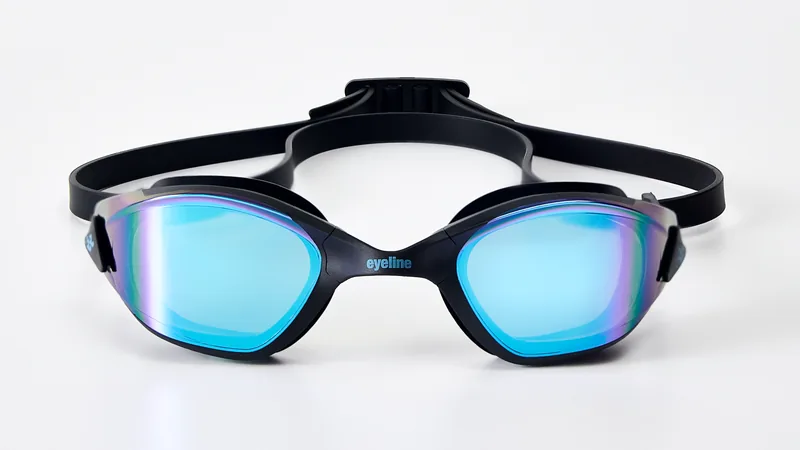
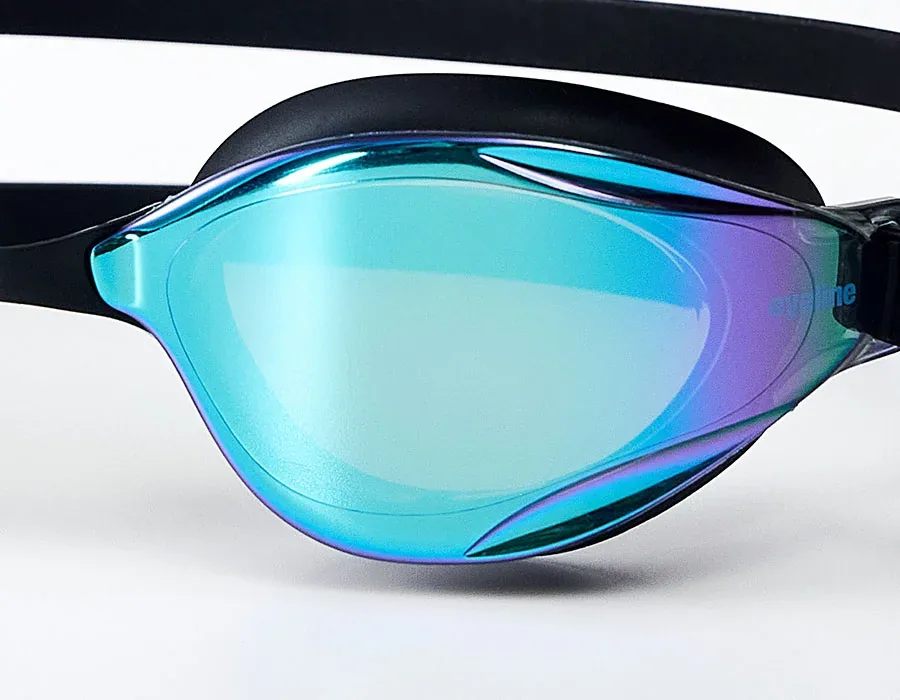
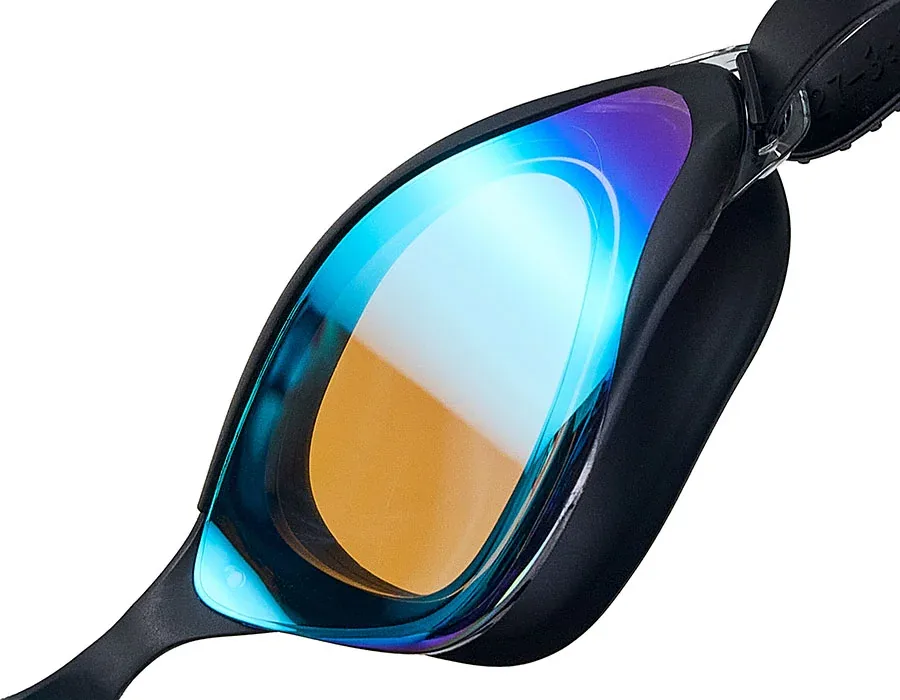
From 380 to 400 nm, polycarbonate is largely transparent unless a UV absorber is compounded in at a higher loading than a standard optical grade carries, or the tint or coating happens to absorb there. A 400 nm cutoff is a formulation decision, and it interacts with the rest of the lens: absorber loading shifts luminous transmittance and can push a clear lens toward a faint yellow, a color masterbatch adds its own absorption curve, and a mirror coating changes the transmitted spectrum again. On one mirror colorway a few years ago, meeting a customer’s 400 nm target took a change to the coating and color process, not just more absorber, plus repeat optical testing before signature samples were released. UV400 is achievable on a swim goggle. It is not automatic.
What ISO 18527-3 actually requires
ISO 18527-3 is the product standard for surface-swimming eyewear. It does not use the term UV400. Instead, Table 1 sets maximum transmittance in three bands, each a fraction of the lens’s mean luminous transmittance, τv D65, at the reference point. The luminous value also decides which of the five tint categories, SW0 to SW4, the lens falls into. Measurement follows ISO 18526-2, Clause 8.
| Tint category | Luminous transmittance τv D65 | Max solar UV-B (280–315 nm) | Max solar UV-A (315–380 nm) | Max mean 380–400 nm |
|---|---|---|---|---|
| SW0 | > 80 % | 0.05 × τv | 0.50 × τv | 0.75 × τv |
| SW1 | > 43 % to ≤ 80 % | 0.05 × τv | 0.50 × τv | 0.75 × τv |
| SW2 | > 18 % to ≤ 43 % | 0.05 × τv | 0.25 × τv | 0.50 × τv |
| SW3 | > 8 % to ≤ 18 % | 0.05 × τv | 0.25 × τv | 0.50 × τv |
| SW4 | > 3 % to ≤ 8 % | 0.05 × τv | 0.25 × τv | 0.50 × τv |
Source: ISO 18527-3:2020, Table 1. Solar UV-A and UV-B values are weighted for the solar spectrum and the eye’s relative sensitivity at each wavelength; the 380–400 nm value is a plain mean. The standard notes that some national requirements set a different long-wavelength limit for UV-A.
Three points in that table matter for a claim. The limits are ratios, so the darker the lens, the less UV it may pass. The standard does cover the 380 to 400 nm band UV400 refers to, but only as a mean with a generous ceiling. And UV-B is held far tighter than UV-A in every category, because it does the most damage per photon.
Why a compliant clear lens is not a UV400 lens
Put numbers on the ratios and the gap between “conforms to ISO 18527-3” and “UV400” becomes visible.
- A clear SW0 lens at 90 % luminous transmittance may transmit up to 4.5 % of solar UV-B, 45 % of solar UV-A, and a mean of 67.5 % between 380 and 400 nm, and still conform.
- A light-tint SW1 lens at 60 % may transmit up to 3 % UV-B, 30 % UV-A, and 45 % at 380 to 400 nm.
- A dark SW3 mirror at 12 % may transmit at most 0.6 % UV-B, 3 % UV-A, and 6 % at 380 to 400 nm.
So a clear indoor goggle can hold a valid ISO 18527-3 report and still pass two thirds of the light in the band UV400 is named for, while a conforming dark outdoor mirror is already close to UV400 because the ratio has done the work. The standard is sensibly scaling UV protection to the conditions each tint is meant for. But “ISO compliant” and “UV400” are different claims with different evidence, and a spec that asks for both on a clear lens is asking for a formulation change, not a certificate.
Why sunglasses standards get cited by mistake
Swim goggle packaging artwork regularly arrives citing ANSI Z80.3 or EN ISO 12312-1. Both are sunglasses standards: they define UV to 380 nm, set transmittance limits for eyewear worn in air, and contain none of the leakage, impact, headband, or nosebridge tests a swim goggle must pass. A goggle sold into the EU is personal protective equipment under Regulation (EU) 2016/425, and the product standard behind its CE file is EN ISO 18527-3. Citing the wrong one is a marking error that a careful customer or a market-surveillance authority will catch, and it usually signals that the UV claim beside it was inherited from a sunglasses supplier rather than measured on the goggle.
The sunglasses standards legitimately enter only through the swim goggle standard itself: photochromic and polarizing swim lenses must meet the corresponding transmittance clauses of ISO 12312-1. If your lens is neither, the reference does not belong on your packaging.
What the standard says about claiming a number
ISO 18527-3 expects brands to want to print a UV figure, and Clause 5.5 sets the rule for claimed solar absorption and transmittance. It is optional in that you need not make a claim, not in that a claim is free. If a lens is claimed to have x % solar UV absorption, its solar UV transmittance measured to ISO 18526-2 must not exceed (100.5 − x) %. If it is claimed to transmit less than x %, the measured value must not exceed (x + 0.5) %. The same form applies to UV-A on its own.
Against common carton copy, “100 % UV protection” means measured solar UV transmittance of 0.5 % or less, and “99 % UV protection” means 1.5 % or less. “UV400” is not a percentage, so the clause does not apply to it directly, but a buyer defending the phrase will face the same question: what did the lens measure, on what instrument, in what state, against what limit. The answer to that question is the whole substance of a UV claim.
How UV transmittance is measured in a factory lab
The instrument is a UV-visible spectrophotometer. A finished lens or molded blank is mounted so the beam passes through the reference point, the spot in front of the pupil that the standard defines, at the angle the eye would look through it. The instrument scans transmittance, typically from 280 to 780 nm, and the software computes what the standard asks for: luminous transmittance against the D65 daylight illuminant and the eye’s sensitivity curve, solar UV-A and UV-B weighted for the solar spectrum and spectral effectiveness, and the plain mean across 380 to 400 nm.
We run this in-house, on the lens states that actually ship. The lens a buyer receives is not a clear polycarbonate blank; it is a specific resin lot with a specific absorber loading and masterbatch, often mirror coated afterward. Each state has its own transmission curve, so a report on the clear blank does not substantiate a claim on the dark mirror, and one colorway’s report does not cover the next. We measure both reference points, left and right, because the standard also limits how much they may differ and how uniform a single lens must be. And we keep the results as a running series, because the real production question is not whether one sample passed but whether the process stays inside the limit lot after lot.
A brand should ask for the report at that level: model, colorway, coating state, the four measured values, the tint category they imply, the test method, and the date. A single “UV tested” line covering a whole range is not a report; it is a summary of one.
Why measured values drift in production
UV transmittance fails quietly, because nothing about it is visible. A lens compound that arrives without its UV absorber passes every visual and dimensional check and fails only on the spectrophotometer. We have seen exactly that on incoming lens material: the parts looked correct, the UV scan did not, and the lot was held. The three drivers we watch are:
- Absorber and masterbatch consistency. The color concentrate carries its own absorption curve, and a new masterbatch supplier or uneven dosing shifts the transmittance of the whole lot, sometimes across a category boundary.
- Coating. A mirror coating applied after molding changes the transmitted spectrum. The UV figure that matters is measured after coating, on the production recipe, not on the blank.
- Fixture and geometry. A curved wide-vision lens must meet the beam at the reference point and the correct angle; a poorly seated fixture reads the wrong spot and produces a false non-uniformity. The fix is a fixture, not a formulation change, but it takes a lab that knows the difference.
For procurement, this means a UV report has a shelf life. Any change to resin grade, absorber loading, masterbatch, or coating recipe should trigger a re-measure, and the tech pack should say so.
What you need on file before you print a UV claim on the carton
The brand placing the goggle on the market carries the claim. Under the EU PPE Regulation the brand is the “manufacturer” that signs the Declaration of Conformity and holds the technical file; under the EU’s general product safety rules the technical documentation travels with it; and in the United States the Federal Trade Commission’s substantiation policy requires a reasonable basis for an objective product claim before it is made. The factory can produce the evidence, but it cannot carry the claim for you. Before artwork is released, the file should hold:
- The claim, in the exact words that will print, and which of the three it is: ISO 18527-3 conformity, a clause 5.5 percentage, or UV400. Each needs different evidence.
- A spectral transmittance report per shipping lens state: model, colorway, coating, both reference points, with τv D65, solar UV-A, solar UV-B, and the 380 to 400 nm mean, tested to ISO 18526-2 and dated.
- The tint category of each lens, marked on the goggle or its packaging as the standard requires, regardless of any UV wording.
- A pass against the right limit. For an ISO claim, Table 1 at the measured τv. For a percentage, the clause 5.5 arithmetic. For UV400, near-zero transmittance across the full band to 400 nm, on the dark and clear variants alike.
- The market check. Australia and New Zealand define UV to 400 nm; the EU and most other markets to 380 nm. A claim comfortable in one may be examined in the other.
- A re-test trigger in the tech pack, naming the changes that void the report: resin grade, absorber loading, masterbatch, coating recipe.
- Artwork that matches the file, citing no sunglasses standard unless the lens is photochromic or polarizing.
If your factory cannot produce item 2 for the exact lens you are about to ship, the claim is not ready, whatever the sleeve says. Our compliance overview lists the reports we hold, and the factory audit checklist covers how to ask for lab evidence in general.
Three UV claims that do not survive scrutiny
“UV400, because it’s polycarbonate.” Polycarbonate earns UV-B and UV-A protection on its own, but not the 380 to 400 nm band UV400 is named for. Without an absorber loading or tint that covers it, a clear polycarbonate lens is UV380, not UV400.
“It’s ISO 18527-3 tested, so it’s UV protected.” True as far as it goes, which on a clear lens is not far. A conforming SW0 lens may pass 45 % of solar UV-A. The report substantiates conformity, not a percentage and not UV400.
“The whole range is UV400.” Only if every colorway and coating state has been measured and the lightest clear lens clears the bar. In most ranges the clear indoor lens, not the dark mirror, decides whether the claim can be made at all.
None of this argues against printing a UV claim. A measured, scoped claim is one of the few things on a goggle carton a buyer can verify, and the evidence is cheap for a factory that runs the instrument. It argues for printing the claim you can show, on the lens you actually ship. We can help with the report itself, per model and colorway, and with the Mirror Coating and tint decisions that determine what it will say. If a program needs a specific UV target on a specific lens, that is a conversation to have before the color is locked, not after the artwork is.
Frequently asked questions
Do swim goggles have UV protection?
Almost all of them block UV-B and most UV-A, because swim goggle lenses are injection-molded optical polycarbonate and polycarbonate absorbs UV on its own up to roughly 380 nm. The band from 380 to 400 nm is not covered by the material alone; it needs a UV absorber compounded into the resin or a tint or coating that absorbs there. Whether a specific goggle blocks that band depends on its lens formulation, so it has to be measured, not assumed.
What does UV400 mean on swim goggles?
UV400 is a marketing description borrowed from sunglasses. It means the lens transmits close to nothing at wavelengths up to 400 nm. No swim goggle standard defines or tests the term. The international sunglasses standard, ISO 12312-1, defines UV as ending at 380 nm; the Australian and New Zealand standard AS/NZS 1067.1 extends it to 400 nm, which is where the phrase comes from.
Does ISO 18527-3 require UV protection for swim goggles?
Yes, but as ratios rather than fixed percentages. Table 1 of ISO 18527-3 limits solar UV-B transmittance to 0.05 times the lens's luminous transmittance for every tint category, solar UV-A to 0.50 times luminous for SW0 and SW1 and 0.25 times for SW2 to SW4, and the mean transmittance between 380 and 400 nm to 0.75 times luminous for SW0 and SW1 and 0.50 times for SW2 to SW4. A darker lens must therefore block proportionally more UV than a clear one.
Is an ISO 18527-3 compliant swim goggle the same as a UV400 goggle?
No. Because the ISO limits scale with luminous transmittance, a clear SW0 lens at 90 percent luminous transmittance may pass up to 45 percent of solar UV-A and a mean of 67.5 percent between 380 and 400 nm and still conform. A dark SW3 mirror that conforms is close to a UV400 lens in practice, but a clear indoor lens that conforms usually is not. The two are different claims backed by different evidence.
What test report do I need before printing a UV claim on swim goggle packaging?
A spectral transmittance report on the exact lens you ship, per model, colorway, and coating state, measured at both reference points to ISO 18526-2, showing luminous transmittance against D65, solar UV-A, solar UV-B, and the 380 to 400 nm mean, with the resulting tint category and a date. If the claim is a percentage, ISO 18527-3 clause 5.5 sets the arithmetic: a claim of x percent UV absorption requires measured solar UV transmittance of no more than 100.5 minus x percent.
Can a mirror coating add UV protection to a swim goggle?
A mirror coating changes the transmitted spectrum, and a dark mirror lens will generally measure lower UV transmittance than the clear blank it was coated onto. But the coating is applied after molding, so the figure that substantiates a claim is the one measured after coating on the production recipe. Reaching a specific 400 nm target on a mirror colorway can require changes to the coating and color process, not only to the lens compound.
Why do swim goggle packaging designs cite ANSI Z80.3 or ISO 12312-1?
Usually because the artwork or the UV claim was inherited from a sunglasses supplier. Both are sunglasses standards: they define UV to 380 nm and contain none of the leakage, impact, headband, or nosebridge tests a swim goggle must pass. The product standard for a swim goggle is ISO 18527-3, which is also the standard behind an EU CE file. The sunglasses standards apply to a swim goggle only through ISO 18527-3's clauses for photochromic and polarizing lenses.