
What ISO 18527-3 Actually Says About Swim Goggles (and Why Your CE File Quietly Depends On It)
ISO 18527-3 is the international safety and performance test standard for swim goggles and swim masks. It's the product standard your swim goggle's CE file actually rests on — what it tests, what changed in the August 2025 amendment, and what a competent OEM factory should hand you.

Most procurement teams audit a swim goggle factory against ISO 9001. The certificate comes back clean, the supplier scorecard gets a green box, and the sourcing decision moves on. That is a complete audit of the factory’s office. It is not an audit of whether the goggle on the carton will leak in lane four or fracture safely on impact with a pool deck.
The standard that decides that is ISO 18527-3 — the product standard for surface-swimming eyewear. It is the document a CE Declaration of Conformity for a swim goggle sold into the EU quietly rests on, the reference an ISO/IEC 17025 lab cites on a test-report cover sheet, and the body of test methods a competent factory should be able to produce evidence against inside 24 hours of being asked. Most procurement specs we read never name it. The ones that do almost always cite the 2020 edition without knowing that the leakage clause was rewritten in August 2025 under Amendment 1:2025.
This article covers what ISO 18527-3 contains, what changed in the 2025 amendment, where it sits relative to CE marking under PPE Regulation (EU) 2016/425, and what an audit binder should hold. It is written for the brand product manager or sourcing lead writing a tech pack — not the standards engineer who runs the tests.
What ISO 18527-3 actually is
ISO 18527-3:2020 is the third part of the ISO 18527 family — Eye and face protection for sports use — published by ISO/TC 94/SC 6 (Personal Safety / Eye and Face Protection). Its full title is Eye and face protection for sports use — Part 3: Requirements and test methods for eyewear intended to be used for surface swimming.
The scope is narrower than the name suggests. The standard covers swim goggles and swim masks for surface swimming — recreational and competitive — and shallow entry to the water (for example, off the edge of a pool). It does not cover diving masks, high-board diving, or any underwater eyewear used at depth. A factory that markets the same mold under both “swim goggle” and “snorkel mask” labels has to test each application against the standard that applies to it.
The 18527 family map:
| Part | Subject | Published |
|---|---|---|
| ISO 18527-1 | Downhill skiing and snowboarding goggles | 2021 |
| ISO 18527-2 | Eye protectors for squash, racquetball and squash 57 | 2021 |
| ISO 18527-3 | Eyewear for surface swimming | 2020 (amended 2025) |
ISO 18527-3 replaces the older British standard BS 5883:1996 for swim goggles, which is formally withdrawn. The Amendment 1:2025 (covered below) restores the ink-stained water leakage method from BS 5883 — a useful piece of context when a factory shows you a test bench that looks lower-tech than you expected.
What ISO 18527-3 actually tests
The standard runs to roughly forty pages and is paywalled at ISO. What is unambiguous across published lab scopes (QIMA, SGS, Intertek, BSI) is the set of tests a goggle has to pass.
| Test | What it measures | What a fail usually means in production |
|---|---|---|
| Luminous transmittance and tint category | How much visible light the lens lets through; assigns the goggle a tint category SW0–SW4 (see table below) | Pigment loading off-spec, mirror coating thickness drift, lens substrate batch variance |
| UV transmission | Transmittance in the UV-A and UV-B bands relative to visible light | Wrong UV-blocking additive in the lens compound, or none at all |
| Optical quality | Spherical, astigmatic, and prismatic power tolerances across the lens; image distortion | Mold-surface defects, lens curvature drift, gating stress on injection |
| Mechanical impact | Resistance to a defined-mass ball drop onto the lens | Lens substrate too brittle, lens thickness off-spec, gate stress |
| Compression of the eye cup | Eye cup geometry under applied load | Gasket geometry under-dimensioned, frame stiffness insufficient |
| Water seal and leakage | Whether water passes the gasket-to-face seal under defined conditions | Gasket profile too firm, surface finish off, draft angles too steep |
| Headband and bridge | Head strap slip resistance and bridge strap tensile strength | Strap material out of spec, buckle slip beyond tolerance, weld point under-cured |
| Information and marking | Tint category, manufacturer ID, and user instructions present on the goggle or packaging | Marking artwork mismatch with the certified spec, missing or wrong tint mark |
For the mechanical impact test specifically: the standard specifies Strength Level 2 — a steel ball of 22 mm nominal diameter and at least 45 g dropped from 1.27 meters onto each lens reference point, at room temperature (23 ± 5°C). The failure criteria are specific: cracking through the full lens thickness, the goggle separating into pieces, the lens dislodging from the frame, material detaching from the back surface of the lens (opposite the impact side), the ball passing through, or any indication of ball-to-eye contact. That last criterion — evidence the ball reached the simulated eye position — is the one that governs. A lens that shatters in a way that directs fragments toward the eye is a failure even if it stays in one piece. The compressive test applies 600 N through a 50 mm diameter plate; the headband slip test allows a maximum of 6 mm of displacement over 60 stretch cycles; the nosebridge strap must withstand a 40 N axial pull.
The tests buyers fixate on — impact and optical — are about half the panel. The half procurement teams underrate is leakage, compression, and headband, which is exactly where production-quality drift shows up after a tooling change. A goggle that passed optical on first article but fails compression in month six is the classic signal that a factory switched gasket material or mold release without telling the customer.
ISO 18527-3 does not test mirror-coating uniformity or chlorine resistance. Anti-fog is a special case: the standard has an optional clause (9.4) that applies only if the manufacturer claims anti-fog performance — the lens must stay fog-free for at least 20 seconds after removal from 38°C water. A goggle with no anti-fog claim can be fully compliant with no Clause 9.4 result in the file. But if the brand markets it as “anti-fog,” that claim needs the test behind it; without it, the claim is unsubstantiated whatever the packaging says.
The five tint categories — SW0 to SW4
Unlike industrial PPE eyewear (which uses optical class 1, 2, 3 under EN 166), ISO 18527-3 uses a five-step tint category scale based on luminous transmittance with the standard daylight illuminant (τv,D65). The category must be marked on the goggle or its packaging.
| Tint category | Luminous transmittance τv,D65 | Typical use case |
|---|---|---|
| SW0 | > 80 % | Indoor pool, low-light early-morning training, clear lens |
| SW1 | > 43 % to ≤ 80 % | Indoor pool, light tint, smoke or amber |
| SW2 | > 18 % to ≤ 43 % | Mixed indoor/outdoor, mid-density smoke or mirror |
| SW3 | > 8 % to ≤ 18 % | Outdoor pool, bright conditions, dark mirror |
| SW4 | > 3 % to ≤ 8 % | Outdoor open water in direct sunlight, polarized or dense mirror |
One nuance worth writing into a tech pack: the SW category is set by the visible (luminous) transmittance bands above, but ISO 18527-3 ties the lens’s UV limits to that same luminous value rather than to fixed percentages. Maximum solar UV-B transmittance is capped at 0.05 of the luminous transmittance for every category; maximum solar UV-A is capped at 0.50 of luminous for SW0–SW1 and 0.25 of luminous for SW2–SW4. A darker lens therefore has to block proportionally more UV, not less — which is why “UV protection” on a clear SW0 indoor goggle is a weaker claim than on an SW3 outdoor mirror.
A common artwork failure: the goggle is sold as “mirror tint” but the box does not declare a tint category. The marking clause then fails irrespective of how clean the optics tested. Spec a tint category on every variant in the tech pack — and ask the factory to print the category on the inner box or instruction insert, even if the brand sleeve does not show it.
What changed in Amendment 1:2025
ISO 18527-3:2020/Amd 1:2025 was published in August 2025. The British adopted version, BS ISO 18527-3:2020+A1:2025, dropped on 31 August 2025.
The substantive change is in clause 11.1 — the leakage test. The 2020 edition specified a vacuum-chamber method: the goggle is placed in a sealed rig, a defined negative pressure is applied for a defined duration, and pressure decay is measured. The amendment replaces that method with a modified ink-stained water test drawn from the withdrawn BS 5883:1996 — the historic procedure of fitting the goggle, immersing it in tinted water, and inspecting whether colored water passes the seal.
Two typographical errors in clause 11.4.2 were also corrected. The more significant one: the 2020 base standard stated that 60 headband-expansion cycles should be completed in “(60 ± 10) s” — one second per cycle. That is mechanically inconsistent with a controlled cyclic loading rig. The amendment corrects this to (300 ± 10) s — five seconds per cycle. A factory that ran Clause 11.4.2 exactly as written in the 2020 base at the 60-second rate was performing a test no proper rig could execute correctly.
The new Clause 11.1 procedure: the goggle sits face down over clean white absorbent paper, ink-stained water filled into the eyecup(s) to at least 1 mm above the eyecup-to-seal join, for one hour. Any staining on the paper is a fail. On styles where a rigid nosebridge keeps both eyecups from sitting flat at once, the nasal join must still be tested, and the report must note any zone left untested.
The amendment’s practical effect:
- Reports dated before September 2025 referenced the vacuum method. The goggle passed that leakage test. The same goggle has not been tested against the new ink-stained water method.
- Reports dated September 2025 onward should reference the amended clause. If a factory hands you a 2026-dated report still pointing at clause 11.1 as written in 2020, the report is either stale or run against the wrong method.
- There is no public transition window. ISO did not publish a grandfather clause. Practically, EU-bound product placed on the market after late 2025 should reference the amendment in its technical file.
ISO effectively walked the test back to the 1996 BSI procedure: the vacuum-chamber method needed lab equipment most in-line QC benches do not have, while the ink-stained water test is what swim brands used in production for decades — so an OEM factory can demonstrate in-line conformance rather than batch-shipping samples to an outside lab.
The question to ask the factory in 2026: “Has your ISO 18527-3 test report been updated against the Amendment 1:2025 leakage method, or is it still on the 2020 vacuum-chamber method?” If the answer is “still on 2020,” ask for the re-test timeline. If the answer is “what amendment?” — that is its own signal.
ISO 18527-3 vs ISO 9001 — and why audits often check the wrong one
The single most common compliance mistake in swim goggle procurement is treating ISO 9001 as a swim goggle credential. It is not.
| ISO 9001 | ISO 18527-3 | |
|---|---|---|
| What it is | Quality management system standard | Product test standard |
| What it audits | The factory’s documented procedures, internal audits, corrective actions, and management review | A specific product against optical, mechanical, leakage, headband, and marking requirements |
| Who issues / runs it | A certification body issues a certificate to the factory; surveillance audits annual | An ISO/IEC 17025 accredited lab issues a test report against a specific sample |
| What it proves | The factory has documented procedures and follows them | A specific goggle, as tested, meets the swim-goggle safety and performance bar |
| Validity / refresh | Three-year certificate, annual surveillance | Test report tied to a specific design; new test on material/geometry change |
| Where it lives | Hanging on the factory wall | In the brand’s CE technical file |
Both belong in a tech-pack audit. Only one is the swim goggle standard. A factory with a current ISO 9001 certificate and no current ISO 18527-3 test report on the SKU being purchased has been audited on its office, not its product.
The corollary trips up factories too. A factory does not get “ISO 18527-3 certified” — products get tested against ISO 18527-3. When a sales rep says “our factory is ISO 18527-3 certified,” it usually means a translation looseness, one old test report being misdescribed, or no report at all. Ask for the underlying PDF.
ISO 18527-3 vs EN 166 and EN ISO 16321
This one comes up in tech-pack reviews more than it should: a procurement spec sheet asking for “EN 166 compliance” on a swim goggle, copied across from an industrial template. EN 166 is the wrong standard twice over. It was the European standard for occupational eye protection (industrial, construction, lab) — and it was formally replaced on 11 November 2025 by EN ISO 16321, which explicitly excludes sports eyewear and points readers to the ISO 18527 family.
So the correct mark on a swim goggle sold into the EU is EN ISO 18527-3 (or EN ISO 18527-3:2020+A1:2025 once the European-adopted amendment publishes; verify the exact EN designation before printing on a sleeve). A goggle marked “EN 166” or “EN ISO 16321” is mismarked.
How ISO 18527-3 plugs into your CE file
Swim goggles sold into the EU are personal protective equipment (PPE) Category I under Regulation (EU) 2016/425. Category I — “minimal risks” — means the manufacturer self-declares conformity under Module A: internal production control. No Notified Body is required to assess the goggle. The manufacturer (which under 2016/425 is the brand placing the product on the EU market, not the contract factory) signs the Declaration of Conformity and holds the technical file for 10 years after the last unit is placed on the market.
What goes in that technical file, for a Category I swim goggle:
- Product description — model name, every variant on offer (color, tint, lens substrate, gasket material, strap type, prescription/plano)
- Design and construction drawings at assembly and component level
- Bill of materials including lens polymer (typically polycarbonate), gasket elastomer (silicone or TPE), frame polymer, head strap material; with safety-relevant data sheets (REACH SVHC declarations, phthalates where applicable)
- Identification of the applied standard — explicitly EN ISO 18527-3 (with the amendment notation if the file is dated post-September 2025)
- Test reports demonstrating compliance with each clause of EN ISO 18527-3, from an ISO/IEC 17025 accredited laboratory
- Risk analysis naming the residual risks the goggle protects against (mechanical contact with the pool wall or deck, splashes, UV in outdoor pools)
- User instructions in the official languages of every EU member state where the product will be sold — including fit, cleaning, storage, replacement, and the meaning of any markings on the goggle
- Signed EU Declaration of Conformity citing Regulation 2016/425, the harmonized standard, and the responsible person
- Production quality plan showing the manufacturer monitors ongoing conformity of mass production — not just the first-article sample
A useful working note: as of mid-2026, EN ISO 18527-3 is not currently cited in the Official Journal of the EU as a harmonized standard under PPE Regulation 2016/425. The PPE harmonized-standards list (Commission Implementing Decision (EU) 2023/941, last amended by (EU) 2025/895 of 14 May 2025) does not reference it — even though parts 1 (ski and snowboard goggles) and 2 (squash eye protectors) of the same ISO 18527 family are listed. That does not mean the standard is irrelevant — it is the de facto reference every accredited lab and serious brand cites — but it does mean a brand cannot claim the formal presumption of conformity that a harmonized standard would grant. A factory or brand citing EN ISO 18527-3 in a CE technical file is still on solid ground; the file simply has to demonstrate compliance with the PPE Annex II essential requirements directly, using the standard as the technical backbone. Verify the current Official Journal status before finalizing your CE artwork.
The regional picture — beyond the EU
The CE/PPE framing dominates because most B2B swim goggle volume routes through EU compliance. The global picture matters when a program ships worldwide.
| Market | Standard or framework | Mandatory? | Notes |
|---|---|---|---|
| EU | EN ISO 18527-3 (PPE Cat I, Reg. 2016/425) | Required for CE — self-declaration | Amendment 1:2025 active; not yet OJEU-harmonized |
| UK | PPE Regs 2016 retained; CE accepted on the GB market | Required (CE works) | UKCA optional; BS ISO 18527-3:2020+A1:2025 |
| US | No federal PPE standard; ANSI/ISEA Z87.1 excludes sports; FDA treats non-Rx goggles as consumer products | Voluntary | CPSIA mandatory for children’s variants (lead, phthalates, tracking labels, Children’s Product Certificate) |
| China | GB/T 44458.3-2024 (adult, eff. 2025-01-01); GB 40165-2021 (children’s) | Recommended; varies by channel | Structurally aligned with ISO 18527-3 |
| Competition | World Aquatics approved-wearables list | Sanctioned competition only | Eligibility, not safety; an ISO 18527-3 goggle is not automatically approved |
Australia and New Zealand adopt ISO 18527-3 substantively through AS/NZS, on a voluntary basis. The World Aquatics line is the one that trips brands up most often: an ISO 18527-3 test report does not make a goggle legal for sanctioned competition — that needs a separate listing on the World Aquatics approved-wearables list. And a World Aquatics-approved goggle still needs a current ISO 18527-3 report to be CE marked for EU sale. Racing programs need both; training programs need only one.
How to verify a factory’s ISO 18527-3 file — a six-step procurement check
A buyer-side procedure you can run in twenty minutes, before any RFQ moves to a PO. The factory should be able to produce items 1–4 inside 24 hours.
- Ask for the test report PDF on the exact SKU being purchased — not the family. A factory typically holds one report against one variant. The family name on the cover does not cover every color, lens substrate, gasket material, or geometry. Spec the SKU, ask for the matching report.
- Check the edition cited on the cover page. ISO 18527-3:2020 or ISO 18527-3:2020/Amd 1:2025. If the file ships into UK or EU markets in 2026 and the cover still cites 2020 alone, ask whether the leakage clause has been retested. Match the report’s date against the September 2025 cutoff.
- Verify the lab’s ISO/IEC 17025 accreditation. The lab logo on the cover is not the credential — the accreditation certificate is. Pull it. Cross-check the accreditation body in the ILAC MRA signatory search (CNAS for China, A2LA or ANAB for the US, UKAS for the UK, DAkkS for Germany).
- Confirm variant coverage in writing. Tint and mirror-coating changes on the same lens substrate usually do not require retest. Gasket material changes (silicone to TPE or supplier switch), lens substrate changes, and lens geometry changes all do. Get either the variant in question on the report, an engineering rationale for like-for-like equivalence, or a delta-test report.
- Confirm the tint category is declared. Open the production goggle, the inner box, the instruction sheet. Look for “SW0,” “SW1,” “SW2,” “SW3,” or “SW4.” If the marking is missing on a tinted or mirrored goggle, the marking clause fails irrespective of how the optics tested.
- Pull your own Declaration of Conformity. The factory does not issue the EU DoC — your brand does, or your EU Authorized Representative does. Confirm your regulatory file has a current DoC referencing the same standard, the same model, and the same test report. A brand selling under its own label into the EU is the legal manufacturer; the factory is the supplier. The DoC sits in your office, not the factory’s.
Three gaps the checklist won’t catch
Beyond the six steps above, three failure modes turn up again and again when we review technical files:
- Lab report confused with the Declaration of Conformity. A 17025 lab report is the evidence; the DoC is the manufacturer’s sworn one-page statement under PPE 2016/425. A factory that supplies only the lab report and calls it “our CE certificate” has not given you the CE file.
- Children’s variants on the adult file alone. A goggle marketed to children needs the toy-safety overlay on top of ISO 18527-3: EN 71-3 element migration in the EU, CPSIA lead and phthalates with a Children’s Product Certificate in the US, and GB/T 45267-2025 once it becomes effective on 1 September 2026 in China. One PPE Category I file is not the children’s compliance pack.
- Test-report SKU doesn’t match the carton SKU. The factory’s engineering BOM and the brand’s SKU code often diverge. Without a written link between them, the test report does not legally cover what is on the shipping carton.
Where ISO 18527-3 sits in our own files
Eyeline ships every program against a current ISO 18527-3 test report on the production SKU, from an ISO/IEC 17025 accredited lab — run against the 2025 amended leakage method, not the withdrawn 2020 vacuum-chamber procedure. We carry the bill of materials, the lens-substrate trace, the gasket-material trace, and the change-management documentation that links variants back to the certified geometry. We hold them on the SKU, not on the family — so a customer asking for “the file on Model 200 Polarized” gets the file on Model 200 Polarized, not a screen-shot of a Model 200 Clear cover sheet.
See our compliance page for the current certificate set, and how the goggle is actually built for the production context, which pairs with the on-site audit procedure behind the desk audit above. If you are evaluating an OEM partner and want to walk through the test panel and the post-September-2025 amendment together, the contact page routes to the right desk.
How we test beyond ISO 18527-3
ISO 18527-3 is a floor, not a ceiling. It defines the safety and performance bar a swim goggle has to clear; it does not test for chlorine or saltwater coating durability, anti-fog service life, strap fatigue, cosmetic stability, or transit damage — all of which decide whether a goggle survives a real season in a real pool. A factory that tests only to the standard is testing only what it is required to.
On our own line, several checks run tighter than the ISO minimum and gate every shipment:
- Suction-cup (gasket clip) adhesion — held to 4 N, twice the ISO 2 N minimum, so the gasket cannot separate from the lens cup in use.
- Head-strap strength — tested to 50 N against the ISO 40 N requirement, on both the strap body and the strap loop.
- Nose-bridge pull-out — a disassembly check across S, M, and L bridge sizes that ISO does not require, confirming an adjustable bridge will not pull out of its seat.
- Prescription lens optics — Rx lenses are held to the same spherical and cylindrical power tolerances as plano lenses, tighter than the looser allowances ISO grants corrective optics.
Others have no ISO counterpart at all, and run as standard quality screens before a model is released:
- Coating durability — 48-hour chlorinated-water and saltwater soaks, each followed by a rub test, to confirm a mirror or tint coating does not peel in pool or open-water use.
- Anti-fog service life — a repeated fog-and-clear cycle test. Our imported FSI anti-fog validates to 10 cycles; our proprietary Nano anti-fog past 75 — roughly ten times the cycle life.
- Strap fatigue — a head-strap life test past 1,000 stretch cycles.
- Cosmetic and transit stability — eye-cup air-tightness, UV yellowing, color migration under heat and humidity, and packaged-product vibration and drop tests.
These are examples, not an exhaustive list of where we go past the standard. They are design and validation results, not per-unit guarantees — but they are the gap between a goggle that passes a certificate and a goggle that holds up. When you audit a factory’s file, ask not only for the ISO 18527-3 report but for the durability and fatigue data the standard never required it to produce.
Related

Manufacturing
How Swimming Goggles Are Made
A walkthrough of how a high performance swim goggle is made
Learn More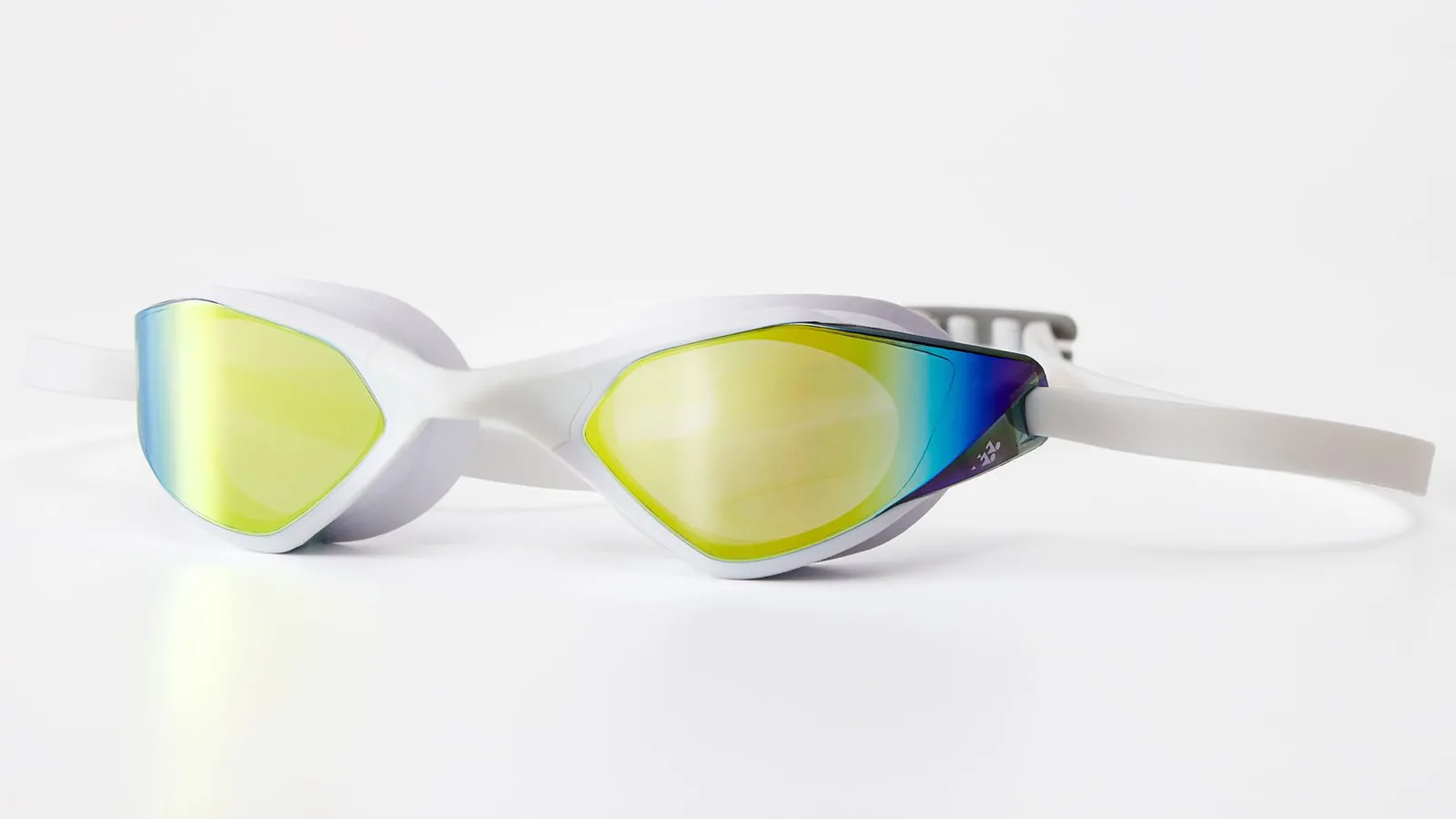
Buyer Guides
Factory Audit Checklist
A seven-question audit checklist for sourcing a swim goggle manufacturer
Learn More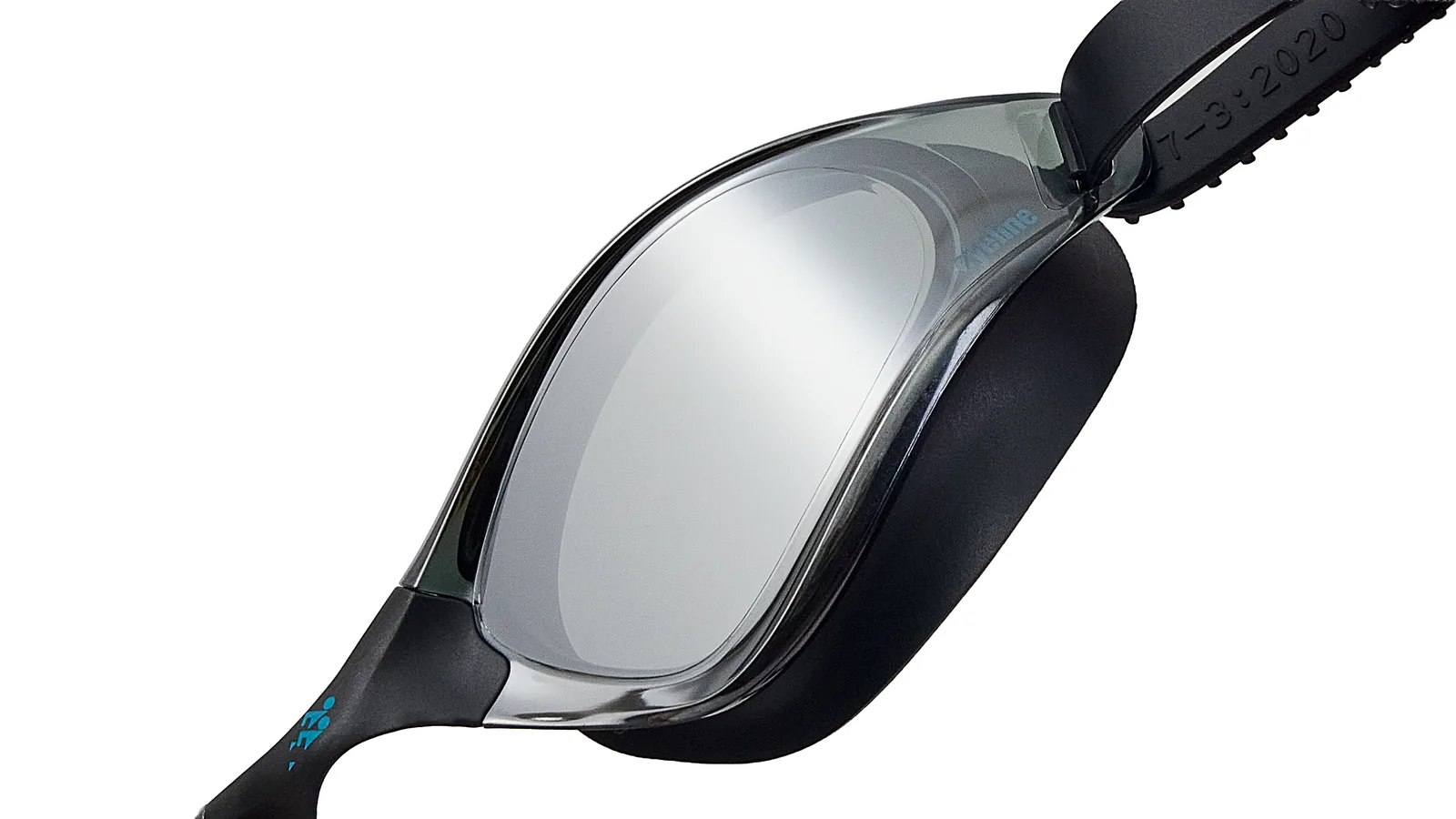
Buyer Guides
Choosing a Manufacturer
A sourcing guide to choosing a swim goggle manufacturer: the vocabulary, the…
Learn More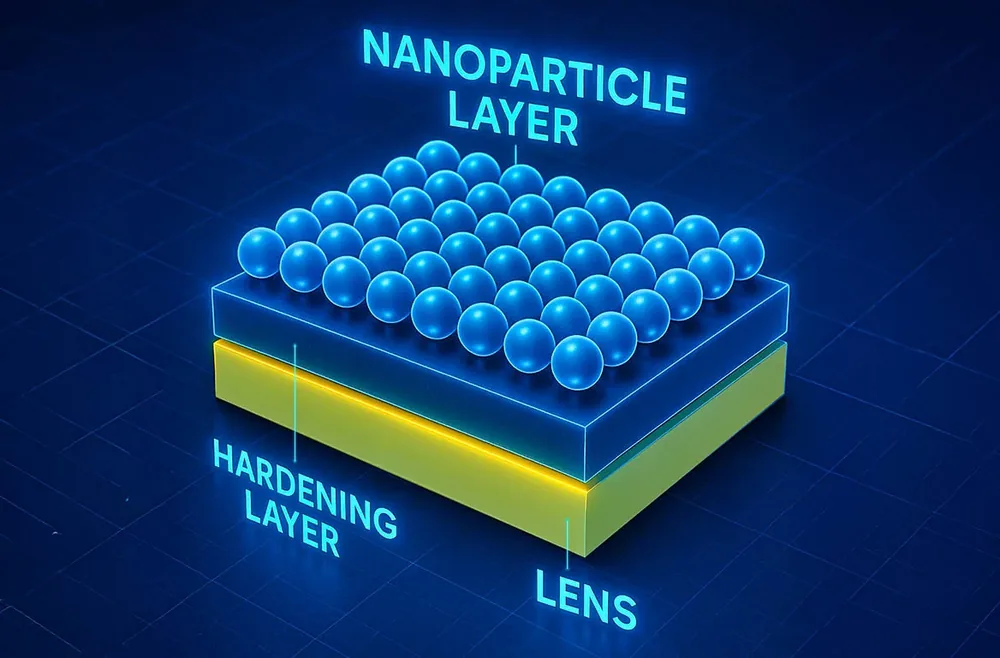
Technology
Anti-Fog
Long-lasting hydrophilic anti-fog coating.
Learn More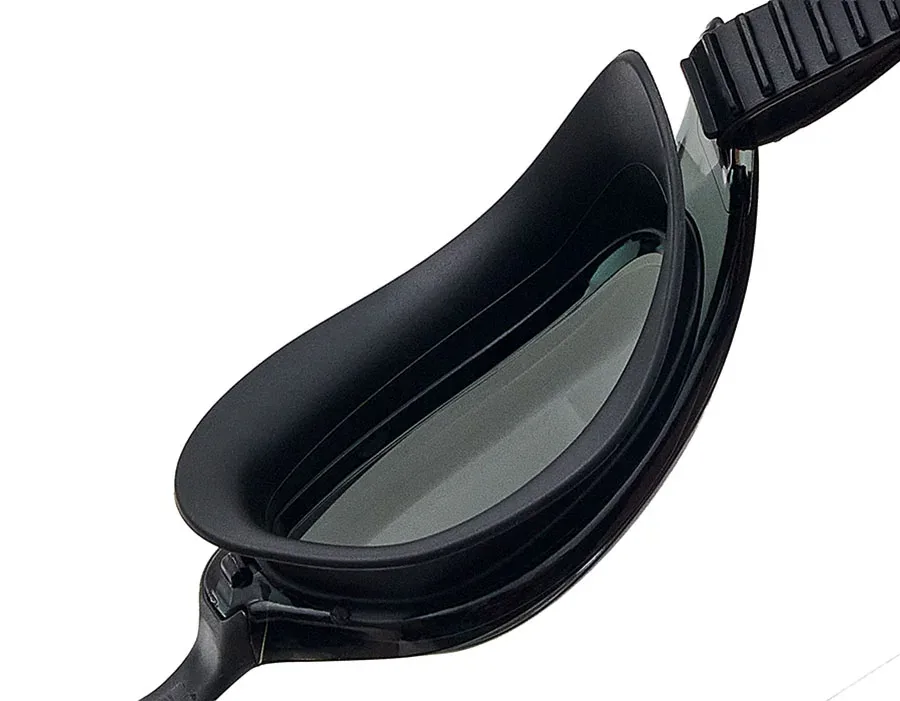
Technology
3D Sculpted Gaskets
Scan-shaped TPE gaskets for a secure, leak-free seal.
Learn More
Technology
Mirror Coating
In-house PVD mirror coatings.
Learn MoreSourcing a swim goggle program?
We run OEM, ODM, and Private Label out of our own factory in Suzhou. Send the brief and the target volume and we’ll come back with a quote — or come walk the floor, virtually or in person.
Get in touch →