Swim Goggle Factory Audit: 7 Questions Procurement Teams Should Ask Before Signing
A seven-question audit checklist for sourcing a swim goggle manufacturer — tooling ownership, certifications, material handling, quality lab, traceability, assembly, and audit history.
Most brand-side audits of a swim goggle factory go shallow. A sourcing manager flies in for a half-day, gets walked through a clean showroom, takes photos in the injection workshop, sees a binder of certificates, and flies out with the impression that everything checked out. Six months later, when the first production order fails an optical acceptance test or a gasket batch fails REACH screening, the audit answers the question of why nobody saw it coming: nobody asked.
A real factory audit is not a tour. It is a structured probe of the systems that make quality repeatable — or the absence of those systems. The seven questions below are the ones the most experienced procurement teams we work with actually ask, and the ones we wish more of them asked. Each is independently diagnostic: a factory that answers all seven sharply is one that can deliver. A factory that fumbles two or three will deliver inconsistently — sometimes very well, sometimes very badly — and you will not know which until the goods arrive.
This checklist is written from inside a swim goggle factory. The framing is buyer-first, but the standards are the ones we hold ourselves to, and the ones our own customers’ auditors hold us to. If you are still narrowing the field rather than auditing a shortlist, start with how to choose a swim goggle manufacturer — this guide picks up where that one ends, at the on-site audit itself.
1. Are the molds yours, or the factory’s — and where are they cut
Mold ownership is the single most consequential commercial question in any goggle program, and it gets glossed over more than any other. Three things to clarify before you sign.
- Who owns the steel. If the brand pays for the mold, the brand should own it — and the contract should say so explicitly, including the right to relocate the mold to a different factory at the end of the program. If the factory owns the mold, the brand is dependent on that factory for the lifetime of the SKU. There is no third option. Vague language — “joint development asset,” “shared tooling” — almost always resolves in the factory’s favor when it matters.
- Where the mold is cut. Cheap tooling is rarely worth what it saves. A lens mold polished to optical-grade finish, with properly engineered gating, cooling, and ejection, is what produces a clear lens on the hundred-thousandth shot as well as the first. A sub-tier shop cutting steel from a 2D drawing without simulation produces a mold that runs — but the lens drifts in clarity, gasket fit varies cavity to cavity, and replacement parts five years on will not match. Ask whether the factory designs and cuts molds in-house or subcontracts them.
- Cavity count and runner balance. A four-cavity mold is not four times as productive if the runner system is unbalanced — three cavities fill correctly and the fourth short-shots or distorts. Ask how cavity balance is verified during tool sampling, and whether the factory signs off every cavity individually in first-article inspection.
A credible factory hands you a tooling proposal with cavity count, steel grade, surface-finish target, gating strategy, and a sampling plan. A non-credible one hands you a price.
2. Which certifications are current — and what do they actually cover
A wall of framed certificates means little on its own. Ask about scope, currency, and audit method.
- The management-system triple. A serious factory holds ISO 9001 (quality), ISO 14001 (environmental), and ISO 45001 (health and safety) — all three, audited annually by an accredited body. Many hold ISO 9001 alone and claim “ISO certified.” Read the scope line on the 9001 certificate, not just the logo: a manufacturer’s reads “manufacture of swimming goggles,” a trading company’s often reads only “sales.”
- The product standard, not just the system. Swim goggles are regulated as PPE in the EU under Regulation 2016/425, and the applicable product standard is ISO 18527-3:2020. A factory should hold model-by-model test reports against it, including the chlorinated-water-plus-UV preconditioning before optical and mechanical testing — not a single blanket certificate. What the standard tests, and why your CE file depends on it, is its own subject: what ISO 18527-3 actually tests.
- Market-specific compliance. CE under the EU PPE Regulation for Europe; UKCA for the UK; FDA registration (Class I) for the US; and GPSR (EU 2023/988, in force since December 2024), which adds traceability documentation many factories cannot produce. Ask which markets the factory ships to today and what compliance file travels with those shipments. See our compliance overview for the full set.
- Social and labor. SLCP (the Social & Labor Convergence Program) is the framework most major sports brands are aligning on, with an A-rating valid three years; BSCI is the older European one. The right question is not “do you have BSCI” — it is “what social audit have you completed in the last 24 months, who conducted it, and at what tier did you score.”
No factory holds every certification. A good one tells you which it holds, which it does not, and why. A factory that claims everything almost certainly has an expired certificate it has not noticed.
3. How does the factory handle materials — and can it prove it
Material handling is where consistent quality and erratic quality are decided, long before injection. Three substances are worth specific questions.
- Polycarbonate for the lens. PC is hygroscopic. Above roughly 0.05% moisture in the barrel, the heat of injection flashes that moisture to steam, which shows up as silvery streaks or microbubbles and drops optical clarity. Ask how the factory dries PC: the credible answer is a closed-loop dehumidifying dryer run to a measured dew point, not a hot-air hopper.
- TPE for the gasket. Thermoplastic-elastomer hardness defines the seal feel. Most credible OEMs run around 40 Shore A for a soft, comfortable gasket; harder grades appear in specific competition contexts. Source matters too — gasket-grade TPE from Taiwan’s mature compounding industry runs more consistently than lower-tier sources. Ask the grade, the durometer, the supplier, and whether incoming lots are tested against spec or simply trusted to the supplier’s certificate.
- Anti-fog chemistry. Anti-fog is the most failure-prone step in a goggle factory and the area where premium and entry tiers diverge most. A standard adhesive-deposit coating beads over in tens of minutes; a nano-hydrophilic anti-fog applied after plasma surface treatment and cured at controlled temperature survives many tens of sessions. Ask the tier, the published cycle-test result and protocol, the cure temperature and time, and whether cure-oven temperature is recorded continuously per batch.
The principle: material-handling discipline is invisible from a showroom and visible from a clipboard. Ask for the clipboard.
4. How independent is the quality lab — and what does it test
A quality department that reports into the production manager cannot stop a production line. Independence is the precondition for everything else: the lab should report to senior leadership with explicit written authority to halt an order and reject a lot. Beyond the org chart, ask what it tests and how often.
- Optical accuracy on a real bench. Refractive power, prismatic error, and color neutrality measured across multiple pupil settings — not a visual spot-check under a lamp. Performance varies across the lens, so a single-point check is insufficient.
- Chlorine and UV aging. Accelerated chambers that compress months of pool chemistry and sunlight into days. Coating delamination, gasket softening, and color shift are the failure modes to watch.
- Mechanical stress. Drop tests, strap pull tests, buckle flex, and gasket seal-cycle tests — run on every new model, not only the showcase ones.
- Restricted-substance panels. REACH, CPSIA, Prop 65, GPSR — new lots tested against the list for the brand’s target markets, with material certificates on file, not just the factory’s domestic baseline.
A lab that runs this in-house with dated calibration certificates catches problems before they ship. Subcontracting the work is fine — provided the cadence is frequent enough that quality is genuinely continuous, not annual.
5. Can the factory trace a defect back to its mold, shift, and lot
Traceability is the test of whether a factory runs on a system or on spreadsheets and memory. Hand a credible factory a finished goggle and a barcode, and within minutes it should tell you which cavity ran the lens, which shift molded the gasket, which polycarbonate lot it came from, who inspected the assembly, and which container it shipped in.
That is what an MES (manufacturing execution system) and ERP deliver when they are actually implemented — not signed for “next quarter.” Ask:
- What MES is in production use today, and on which machines is it live?
- Are the injection machines connected to it, or are cycle counts logged manually?
- Does the ERP integrate the warehouse layer so incoming lots match outgoing shipments?
- How long has the system been running, and what came before it?
A factory with MES/ERP in production for years, the injection fleet on live dashboards, has real data. One installing it next quarter has aspirational traceability. Both can be acceptable partners — you should just know which one you are signing with. Traceability is also what makes a narrow recall possible; a factory that cannot trace has to recall everything.
6. Where is assembly automated — and where is it deliberately not
Automation in a goggle factory is selective for a reason. Injection, anti-fog application, mirror coating, and CCD optical inspection run better automated. Final assembly of overmolded lenses with straps, buckles, and nose bridges involves too much soft material, tactile fit-checking, and model variation for fixed-station automation to beat a trained operator’s hands. The credible posture is automation where it adds consistency, skilled hand assembly where it adds judgment. Ask:
- Is optical inspection automated with CCD cameras and image recognition, or is every lens screened by eye?
- Is anti-fog cure logged continuously, or set manually per batch?
- Is final assembly done by trained operators on documented cells with per-station checks, or by general labor with no station-level QC?
A factory that invested in CCD inspection while keeping final assembly in skilled hands has thought about the trade-offs. One claiming “fully automated assembly” of a complex overmolded goggle is either misrepresenting or building a simpler goggle than the brief implies.
7. How often is the factory audited, by whom, and against what
The strongest signal a factory can give is its own audit record — so ask to see it, and read it for three things.
- Cadence and source. Ask for the list of audit firms on site in the last two years. Third-party names — Bureau Veritas, Intertek, SGS, TÜV, QIMA — carry more weight than self-audits or factory-selected auditors. A factory hosting one audit a year has disciplines that may not have been stress-tested at the cadence yours will demand.
- Results, not just passes. Pass-with-action-items is normal and healthy. Pass-with-no-findings is unusual and worth probing — either the factory is exceptional or the audit was shallow. Ask to see the corrective-action evidence behind a recent finding; a factory that walks you through it openly treats audits as inputs, not obstacles.
- The honest gap. No factory has been audited against every framework. One that says “we’re SLCP A-rated, we do not currently hold BSCI” is more credible than one claiming comprehensive coverage. The gap is not the problem — the transparency about it is the test.
What to do with the answers
Run the seven questions in sequence on every factory under serious consideration, and score each answer on whether you got a sharp, evidence-backed response or a vague reassurance. Three or more vague answers should disqualify a factory from a meaningful program, whatever the price or the relationship. The questions are also useful before the relationship begins: a factory that knows it will be asked them prepares, and in preparing, raises its own standard.
For the wider sourcing decision, see how to choose a swim goggle manufacturer and OEM vs ODM vs private label. If you want a working session through this checklist against our factory in Suzhou, we will answer all seven questions on the record and hand you the documents that back the answers.
Audit us against the seven — start a conversation → · ODM / OEM / private-label inquiries: [email protected]
Related
Buyer Guides
Choosing a Manufacturer
A sourcing guide to choosing a swim goggle manufacturer: the vocabulary, the…
Learn More
Buyer Guides
OEM vs ODM vs Private Label
OEM, ODM, and Private Label swim goggle programs cost differently, take different lead times,…
Learn More
Compliance
ISO 18527-3 Explained
ISO 18527-3 is the international safety and performance test standard for swim goggles and swim…
Learn More
Product
Blade
Hybrid
Learn More
Product
Vortex
Training Small
Learn More
Product
Panora
Mask
Learn More
Product
Zevo
Fitness Large
Learn More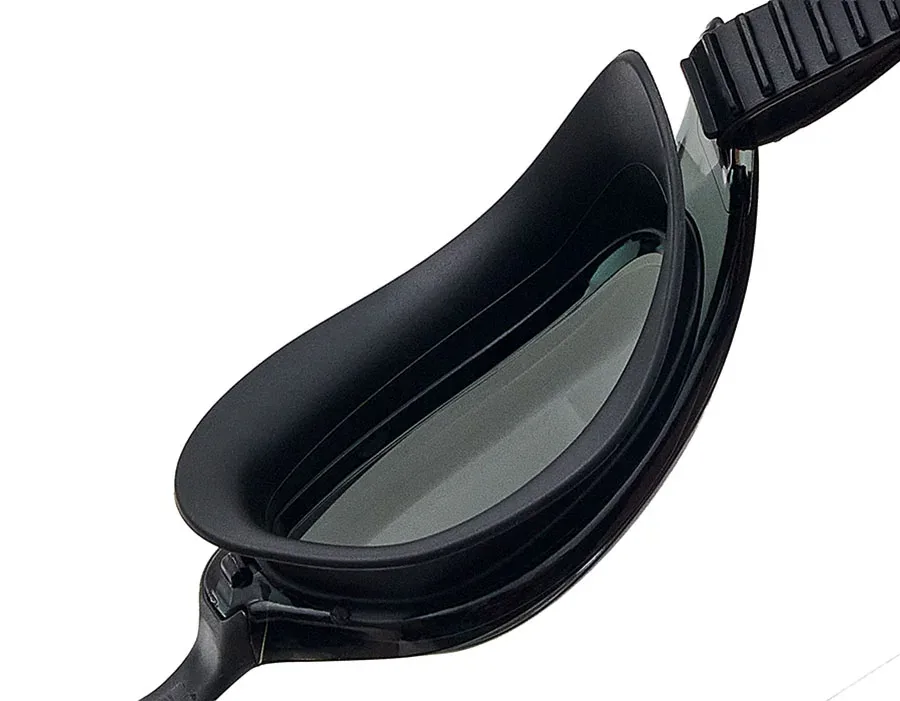
Technology
3D Sculpted Gaskets
Scan-shaped TPE gaskets for a secure, leak-free seal.
Learn More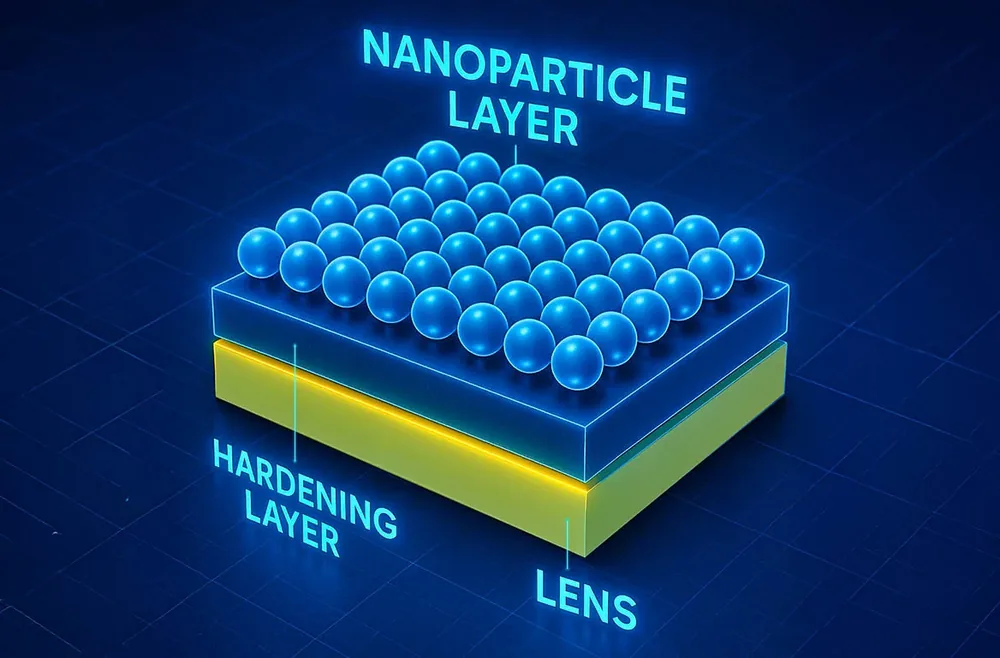
Technology
Anti-Fog
Long-lasting hydrophilic anti-fog coating.
Learn More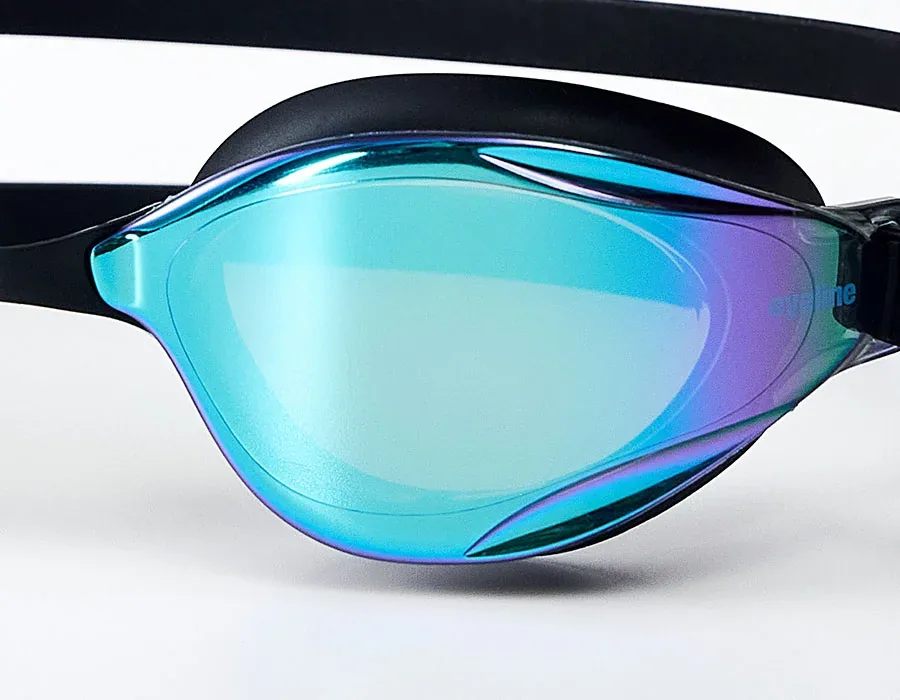
Technology
Mirror Coating
In-house PVD mirror coatings.
Learn MoreSourcing a swim goggle program?
We run OEM, ODM, and Private Label out of our own factory in Suzhou. Send the brief and the target volume and we’ll come back with a quote — or come walk the floor, virtually or in person.
Get in touch →