How to Choose a Swim Goggle Manufacturer: A Sourcing Guide for Brand Owners
A sourcing guide to choosing a swim goggle manufacturer: the vocabulary, the vertical-integration test, the vetting steps, and the country trade-offs. It separates real manufacturers from trading companies reselling someone else's mold, and lists what to verify before paying a deposit: tooling ownership, in-house coating, audit history. The country section weighs China against the alternatives on cost, tooling depth, and lead time.
Most brand owners sourcing swim goggles for the first time get more bad advice than good. The category is crowded with businesses that describe themselves interchangeably as suppliers, manufacturers, OEM partners, sourcing agents, factories, and private-label houses — even though those words describe very different operations. The decision a brand owner makes when picking a swim goggle manufacturer is not really a decision about price, or even quality, on day one. It is a decision about who runs the production of the product for the next three to ten years. Choosing the wrong type of partner — a trading company when the brief needed a real factory, an entry-tier contract assembler when the brief needed a vertically integrated manufacturer — is not a problem that gets fixed in version two of the swim goggle. It restarts the program.
This guide is written for sourcing managers, founders, and brand product leaders evaluating swim goggle manufacturers who want a structured way through the decision. It covers the vocabulary, the vertical-integration test, the desk and on-site vetting steps, the country trade-offs, and the relationship signals that matter. It is written from inside a swim goggle manufacturer that has been running since 1963, and it draws on the things we have watched experienced brand teams check carefully — and the things we have watched newer brand teams miss.
What “swim goggle manufacturer” actually means
The word “manufacturer” carries weight on a brand owner’s checklist, but in this category it is one of the most loosely used words in supplier vocabulary. Five business models routinely market themselves under the same label. A clean sourcing process starts by separating them.
A swim goggle manufacturer owns the production capability end to end — industrial design, engineering, tooling, injection molding, surface treatment, gasket overmolding or assembly, final assembly, and quality control — and runs those processes in-house. The factory is a real factory with workshops, presses, ovens, lab equipment, and trained operators. When a brand places an order, the goods are made by the entity the brand is paying.
A trading company is a procurement intermediary. It carries no production capability of its own; it issues orders to one or more underlying factories on behalf of brand customers, manages the paperwork, and clips a margin. Some trading companies are excellent — they aggregate factories, manage QC, handle logistics, and shield brands from supplier-side risk. Many are not. The key tell is that the entity on the contract is different from the entity running the machines.
A distributor moves finished product into a regional market. Distributors are not manufacturers; the confusion arises because some distributors carry private-label catalogs that look like factory catalogs.
A contract assembler performs final assembly only — strap, buckle, nose-bridge fitting, packaging — on parts molded and coated by someone else. Contract assemblers are common in the entry-tier swim goggle segment and can be the right answer for a low-cost private-label range. They are not the right answer for a premium program where lens quality, anti-fog performance, and gasket consistency define the product.
A private-label house is a manufacturer that runs an existing catalog and applies brand owners’ logos at the line. Whether a private-label house counts as a real manufacturer depends on whether it runs its own production or sub-contracts the production behind the catalog. The same word covers both. The distinctions between OEM, ODM, and private-label production are worth settling before the first supplier call.
The first vetting question is therefore the simplest: “Are you the entity that makes the product, or are you the entity that arranges for someone else to make it?” The honest answer to that question separates the field cleanly.
The two kinds of swim goggle manufacturer: generalist and specialist
Among the businesses that are genuinely manufacturers, a second distinction matters: whether swim goggles are a product the manufacturer specializes in, or one of several adjacent categories run on shared equipment.
Generalist manufacturers make a range of plastics-based sports or safety products — ski swim goggles, safety eyewear, sports glasses, snorkels, swim accessories — and route swim goggle production through workshops that are not dedicated to swim. Generalists offer some cross-pollination of technology (a coating innovation in safety eyewear can migrate to swim) and broader scale economics, but they rarely match a specialist on swim-specific process refinement. Tooling shop-floor priority, anti-fog cycle counts, lens geometry, and gasket comfort all benefit from a workshop where swim swim goggles are the focus, not a side product.
Specialist swim goggle manufacturers run swim goggles as their primary or only product. Tooling teams have built molds for swim goggles for years; engineers know the optical and ergonomic constraints by reflex; QC labs are calibrated for the exact failure modes the category produces — lens fog, gasket leak, mirror coating delamination, strap fatigue. The depth shows up in the catalog and in how the factory talks about the product.
The right pick depends on the brand’s positioning. Entry-tier private-label can be run cleanly by either; premium swim goggle programs almost always go to specialists, because the difference shows up in the swim goggle.
The vertical-integration test: the single most important filter
The most consequential structural question to ask a swim goggle manufacturer is whether the production stages happen under one roof, or whether they are scattered across subcontractors the manufacturer coordinates but does not own. Vertical integration here means a single site (or single corporate group on contiguous sites) running:
- Industrial design and engineering
- Mold tooling — designed, cut, polished, and maintained in-house
- Injection molding of optical-grade polycarbonate lenses, frames, gaskets, side covers, buckles, nose bridges, and spring components
- Surface treatment — hard coating, Anti-Fog application and cure, mirror coating by vacuum deposition
- Gasket overmolding or assembly — TPE bonded to the lens, or precision-fitted into the frame
- Final assembly with operator-level QC
- Quality lab — optical bench, accelerated aging chambers, mechanical stress rigs, restricted-substance testing
- Packaging and dispatch
A vertically integrated swim goggle manufacturer can iterate a design in weeks, hold quality consistency across batches, trace a defect swim goggle back to a specific shift and material lot, and protect the brand’s IP because no critical step leaves the building. A coordinated-but-not-integrated manufacturer can do all of these things on a good day, but every additional subcontracted step is another handoff at which lead time, communication clarity, and quality discipline can fail. Across a multi-year swim goggle program, the failures accumulate.
The test is simple and on-site: ask to walk every workshop. If the factory cannot show injection and coating and assembly on a single site, the operation is coordinated, not integrated. That is not automatically a deal-breaker — some excellent coordinated networks exist — but the brand should know which kind of partner it is signing.
Desk vetting: what to verify before booking the trip
A swim goggle manufacturer worth a factory visit will pass a careful desk review first. Five things to check before flights are booked.
Specificity of the website. A real manufacturer’s website talks about its own processes — the material it dehumidifies, the durometer of its gasket TPE, the cure temperature of its anti-fog coatings, the inspection equipment on its line. A trading company or contract assembler’s site is generic: stock photos, vague “advanced manufacturing capabilities” language, no technical depth. Spend 30 minutes on the site. If the website cannot answer a moderately technical question about the process, the factory’s people probably cannot either.
Certifications, with currency dates. A serious swim swim goggle manufacturer holds the full ISO triple — ISO 9001 (quality), ISO 14001 (environmental), ISO 45001 (occupational health and safety) — all current, audited annually by an accredited body. For market access, look for ISO 18527-3:2020 (the international sports eye protector standard), CE marking under the EU PPE Regulation, UKCA for the UK, FDA registration for the US, and GPSR documentation for EU shipments. For social and labor compliance, the relevant frameworks are SLCP (with an A-rating the highest tier), BSCI (the European framework), and Worldly (the data overlay). A manufacturer that holds three of these will say which three. A manufacturer that claims everything probably has at least one expired certificate it has not noticed. Eyeline publishes its current certificate set on the compliance page.
Audit history. Ask how many formal audits the manufacturer hosts a year, which third-party firms conduct them, and whether any findings remain open — a manufacturer audited regularly by independent auditors is one whose disciplines have been stress-tested. We break the on-site audit into seven questions to ask in our swim goggle factory audit checklist.
Brand references at the right tier. Most swim goggle manufacturers operate under NDA with their brand customers and cannot name them publicly. That is normal and expected. What is reasonable to ask for is a description of the category of brand the manufacturer serves — Olympic swim programs, global mass-market sports brands, European triathlon brands, Asian competitive swim labels. A manufacturer whose anonymized references match the tier and geography of the brand has done the relevant work before. References that are vague — “global brands” with no further detail — are a tell.
Technical writing presence. A swim goggle manufacturer that publishes its own technical content — process explainers, materials guides, compliance walk-throughs — is a manufacturer where the people running the business actually understand the product. This is a soft signal, but a powerful one. Generic SEO blog filler does not count; specific, factory-anchored writing does.
On-site vetting: what to look at when you visit
Once a swim goggle manufacturer has passed desk review, an on-site visit confirms the answers. A real factory visit covers seven structural areas: tooling ownership, certification scope, material handling discipline, quality lab independence, traceability infrastructure, the automation-versus-hand-assembly balance, and audit history.
What separates a tour from an audit is who asks the questions. A tour is the manufacturer showing the brand what it wants the brand to see. An audit is the brand walking with a checklist and asking for evidence. The same physical visit can be either, depending on the buyer’s preparation. A well-prepared brand owner can audit a swim goggle manufacturer in half a day and learn more than three relationship-building visits would have produced.
How to compare true manufacturers
By this point a brand can hold two or three candidates that are all genuine, vertically integrated swim goggle manufacturers. Every one passes the vocabulary test and the audit. They are still not equal choices. Six things separate real manufacturers from each other.
Segment track record. A factory that has built racing swim goggles for years is not automatically the right factory for a kids’ line or an open-water mask. Ask how many programs the manufacturer has run in your specific segment, and how recently. Depth in a category shows up in tooling instincts, fit data, and the questions the engineers ask back.
Tooling capability and iteration speed. A manufacturer with an in-house mold shop can cut, adjust, and re-test tooling on its own schedule, and iterate a design in weeks rather than months. Ask how many sample rounds a typical new model takes and how long each round runs. Slow tooling is the most common hidden cost in a swim goggle program.
Capacity headroom. A brand wants to be a meaningful customer, not a marginal one, and not so large it consumes the factory. Ask current capacity utilization and where the projected volume would sit. A manufacturer running flat-out has no room for a brand’s growth or its peak season; one where the brand would be the largest account carries its own risk.
Design and engineering depth. A true ODM partner can take a brief — target swimmer, price point, launch date — and design the swim goggle. An OEM-only manufacturer builds well to supplied drawings but cannot originate. Decide which the program needs, then test it: hand each candidate the same short brief and judge the response.
Materials control. Optical-grade polycarbonate and gasket-grade TPE have to be specified and held lot to lot. Ask each manufacturer what it specs, where it sources, and what happens when a material runs short. A factory that substitutes quietly will cost the brand a field failure later.
Compliance scope against your markets. Confirm each manufacturer holds what the target markets require: ISO 18527-3, CE, UKCA, FDA, GPSR. Check that the certificates are current. A manufacturer certified for the markets a brand actually sells into is worth more than one with a longer but mismatched list.
Run the same questions past every candidate, and the comparison stops being about who pitches best. It becomes about which manufacturer fits the program the brand is actually planning.
Country and region trade-offs
Where the swim goggle manufacturer is based shapes the program. The major regions:
China carries the largest concentration of swim goggle manufacturing globally, with a high density of factories in the Yangtze River Delta around Suzhou, Wujiang, and adjacent cities. The historical advantages are mature polymer supply chains, deep tooling expertise, scale, and a clustering of skilled labor. The considerations are tariffs (US Section 301 and similar regimes have shifted procurement math for some brands), social and environmental audit expectations from Western buyers, and the variation in quality between top-tier factories and lower-tier ones — a wider spread in China than in any other producing region. The phrase “swimming goggle factory China” represents the largest single segment of swim goggle global supply, but it covers a quality range from world-class to entry-tier.
Taiwan is a historical leader in the category, particularly for premium polymer and optical applications. The polymer compounding industry is mature; specialty TPE for gasket-grade applications is sourced from Taiwan by serious manufacturers globally, including those based in mainland China. Taiwan’s manufacturing footprint for swim goggles is smaller in absolute volume today than China’s, but the design and material expertise sits there.
Vietnam is growing as a regional alternative for general sports goods manufacturing, particularly for brands de-risking from China-only sourcing. The specialist swim goggle infrastructure is still thin — few dedicated swim goggle factories at scale — though contract assembly is available. Brands considering Vietnam for swim goggles typically run a hybrid model: lens and gasket molding from a China or Taiwan source, final assembly in Vietnam.
Other regions carry niche manufacturers. Italy, Korea, and Japan each have small-scale swim goggle production, often tied to specific historical brands. These factories are rarely the right answer for high-volume programs.
The right country depends on tariff structure, audit posture, premium positioning, and how many other product categories the brand sources from the same region. A brand running its swim goggle program alongside an existing China-based apparel program has different math from a brand starting fresh.
The relationship test: choosing a multi-year partner
A swim goggle program runs years, not months. Tooling is amortized across a life that often exceeds five years. Anti-fog coating chemistry, gasket geometry, and brand SKU history are institutional knowledge that accumulates inside the manufacturer over time. Switching a swim goggle manufacturer mid-program is expensive and slow — usually six to twelve months of parallel production while the new factory builds tools, certifies parts, and runs first-articles.
That makes the manufacturer choice a partner choice. The questions that matter here are softer than the structural ones, but at least as predictive.
How does the manufacturer handle the first hard question — the one where it has a gap, an uncertainty, or a previous failure to explain? A manufacturer that answers transparently, says what it does not know, and offers to follow up with data is a manufacturer the brand can work with when the next hard question comes up in production. A manufacturer that becomes defensive, deflects, or claims it has never had a problem is a manufacturer that will hide problems when they happen — and they always happen.
How does the manufacturer describe its other customers? The right tone is respectful, specific in category but not in name, and free of complaint. A manufacturer that complains about other customers in the first meeting will complain about you in the next one.
How fast does the manufacturer respond to a non-trivial technical question by email, and how does the answer compare to what was said in person? Consistency between the meeting room and the email reply is a strong proxy for institutional discipline.
What does the manufacturer want from the brand — not just commercially, but operationally? A manufacturer that wants a forecast cadence, a clear approval process, and a sample-review rhythm is a manufacturer running on a system. A manufacturer that wants only the purchase order is a manufacturer running on opportunism.
A short decision framework
Before signing, run a manufacturer through five filters in order:
- Are you a real manufacturer? Vocabulary clarity — a factory, not a trading company.
- Are you a swim goggle specialist or a generalist? Match to product positioning.
- Are you vertically integrated under one roof? The single most predictive structural filter.
- Can you pass a structured audit? Tooling ownership, certifications, material handling, quality lab, traceability, automation balance, and audit history.
- Can we work with you for the next five years? The relationship signal — transparency, consistency, and what they want operationally.
A swim goggle manufacturer that passes all five is a small group. One that passes four out of five may still be the right answer, depending on which filter it misses and how the program is structured.
The cost of running this process before signing is one or two weeks of structured evaluation. The cost of skipping it is the entire program restarting at month nine, when the first production order arrives and the answer is different from what the brand thought it had bought.
If you are evaluating swim goggle manufacturers for a sourcing program and want a working session through this framework against our swimming goggle factory in Suzhou, the contact line is below. We will answer the structural questions on the record, hand you the documents that back the answers, and walk every workshop on site.
ODM, OEM, and private-label inquiries — [email protected]
Related
Buyer Guides
Factory Audit Checklist
A seven-question audit checklist for sourcing a swim goggle manufacturer
Learn More
Buyer Guides
OEM vs ODM vs Private Label
OEM, ODM, and Private Label swim goggle programs cost differently, take different lead times,…
Learn More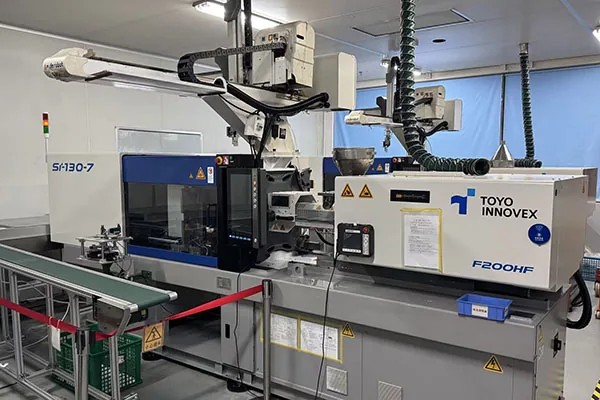
Manufacturing
How Swimming Goggles Are Made
A walkthrough of how a high performance swim goggle is made
Learn More
Product
Aqua
Training Medium
Learn More
Product
Blade
Hybrid
Learn More
Product
Vortex
Training Small
Learn More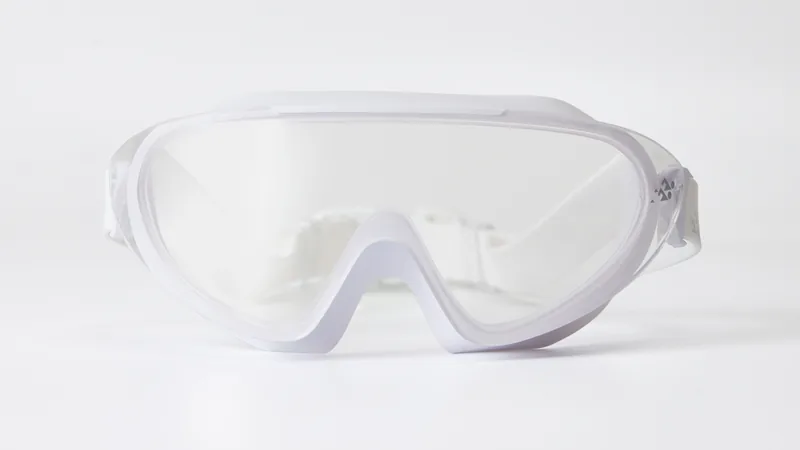
Product
Panora
Mask
Learn More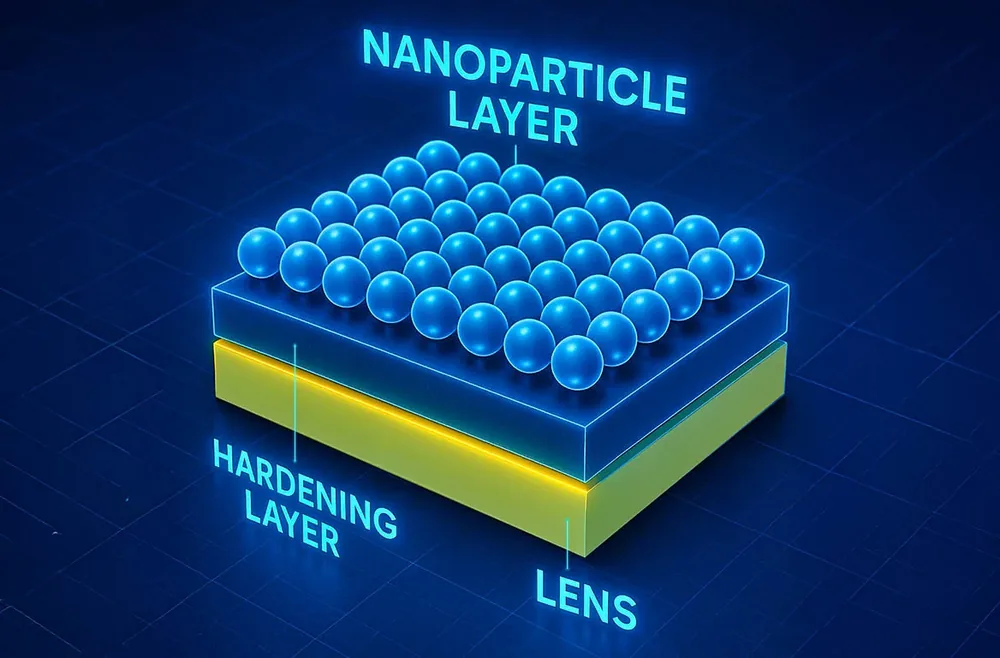
Technology
Anti-Fog
Long-lasting hydrophilic anti-fog coating.
Learn More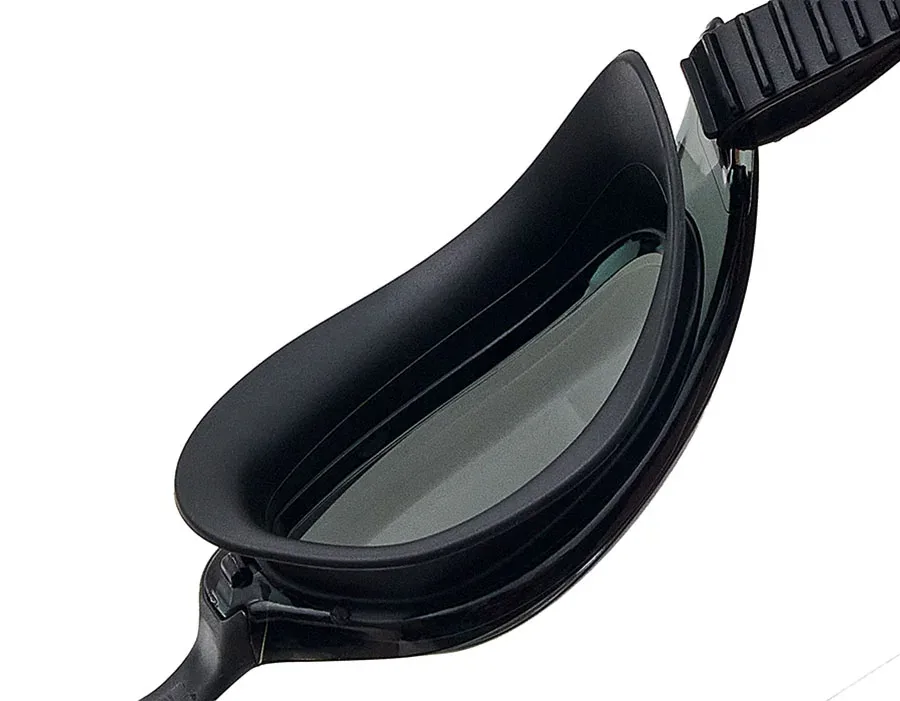
Technology
3D Sculpted Gaskets
Scan-shaped TPE gaskets for a secure, leak-free seal.
Learn More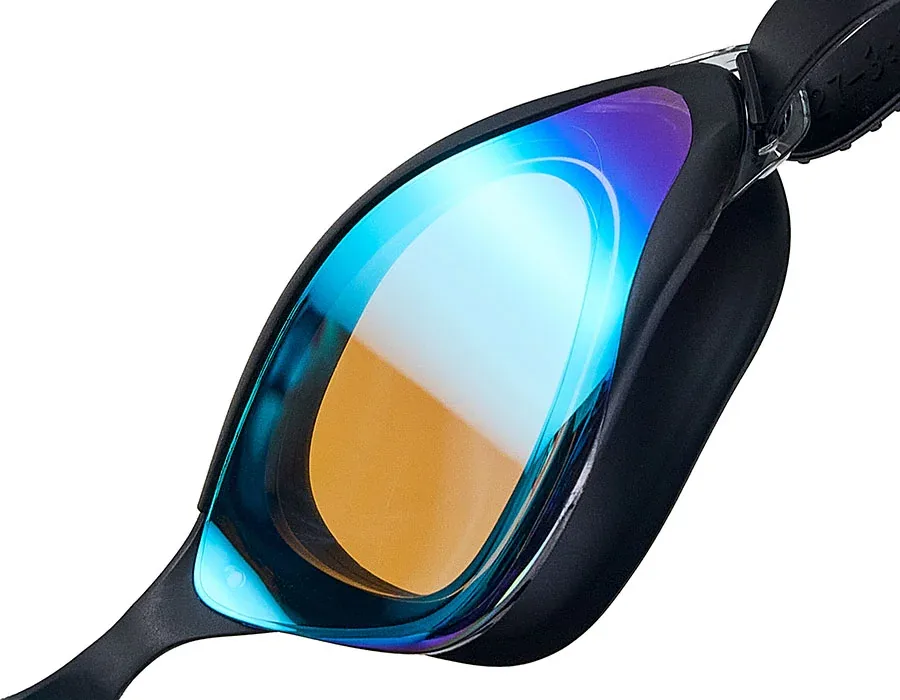
Technology
Wide Vision
Curved, distortion-free wide-vision lenses.
Learn MoreSourcing a swim goggle program?
We run OEM, ODM, and Private Label out of our own factory in Suzhou. Send the brief and the target volume and we’ll come back with a quote — or come walk the floor, virtually or in person.
Get in touch →