
In-House R&D at a Swim Goggle Manufacturer: How a New Goggle Is Developed
What in-house R&D really means at a swim goggle factory — the stage-gate path from brief to certified product, and how to tell real R&D from a spec sheet.
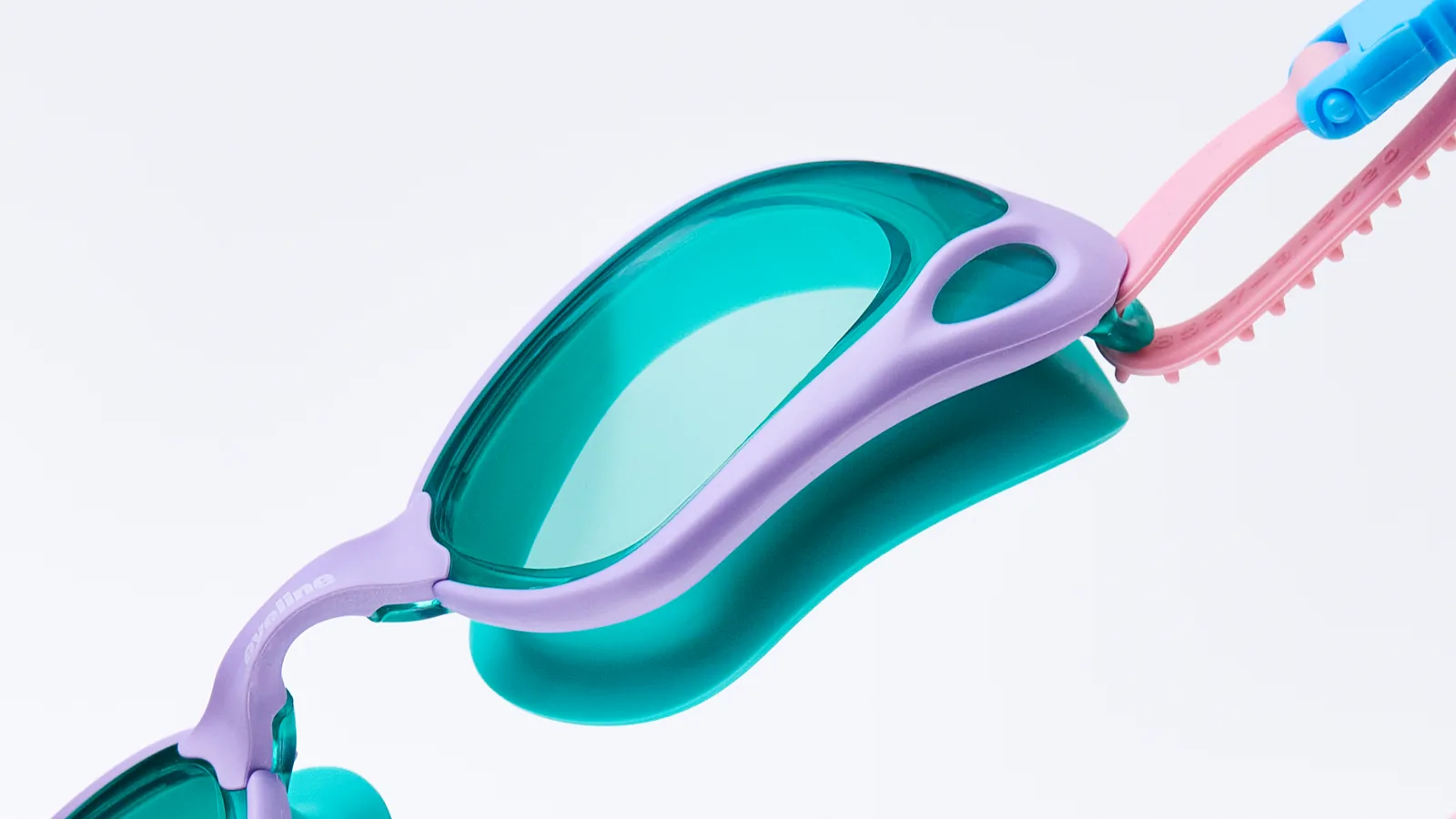
Most factories that make swim goggles don’t develop them. They run someone else’s tooling, or they rebadge a model already in their catalog. Worse, some copy a competitor’s goggle, tweak a detail or two, and call it their own. Rebadging is a real and useful service — but it’s not R&D, and it’s not what a brand is buying when it wants a goggle that doesn’t exist yet. Developing a new goggle means taking a brief and turning it into a tooled, certified, swimmer-validated product: industrial design, optical and mechanical engineering, mold development, materials work, and a test lab, all in-house.
For a brand, that distinction is the point. A rebadged model is one any competitor can put their own logo on too — which leaves you competing on price and a sticker. A design that’s yours alone, that no one else can sell, is how a brand sets itself apart and earns a lasting place in the market. Own the design and you own the difference.
This is what in-house R&D actually looks like at a swim goggle factory — the stage-gate development process a new model passes through before it ever ships — and, at the end, how a sourcing manager can tell genuine R&D from a spec sheet. We’ve been an OEM swim goggle manufacturer since 1963, and we design, engineer, tool, mold, coat, assemble, and test in a single 38,000 m² operation in Suzhou, with the industrial design and engineering run from our own Taipei design center. The process below is ours, but the engineering in it is standard practice — which is the point: you should be able to check it against any credible source.
What “in-house R&D” actually means
The sourcing vocabulary is worth getting straight. An OEM arrangement builds to your design and specifications — you bring the design, the factory builds to it. An ODM arrangement is the reverse: the factory does the design work, engineering a new product for you from your brief. That’s distinct from private label, where you put your own logo on a goggle the factory already sells. The distinction that matters for R&D isn’t which acronym a factory uses — it’s whether the factory owns its design and its tooling, or only runs what others hand it. A manufacturer that designs its own products and cuts its own molds can take a blank brief to a finished goggle and iterate it precisely. Every goggle in the Eyeline line was designed exactly that way — from scratch, and distinct from anything already on the market.
That difference is visible if you know where to look, and we come back to it at the end. First, the development process itself.
Stage 1 — The brief and industrial design
Every new goggle starts from a brief, not a drawing: who the swimmer is, the price tier, the target volume, and the launch date. Those answers cascade through every later decision — gasket profile, lens geometry, anti-fog tier, materials, tooling complexity. From the brief, our in-house design center works up form factors, proportions, lens shapes, and strap geometry.
Development runs as a stage-gate process: the project only advances when it clears a defined review at each phase, rather than sliding forward on momentum. The most expensive mistakes in a goggle program are the ones caught late, so the gates exist to kill or correct a design while it’s still cheap to change.
Stage 2 — CAD engineering and design for manufacture
Approved concepts move into parametric CAD, where the goggle stops being a sketch and becomes an engineered assembly. Every component is modeled together — lens curvature, gasket cross-section, nose bridge, strap attachment, buckle — so the interfaces between parts are validated before any steel is cut. This is also where design for manufacture (DFM) is settled, and the detail here is most of what separates a goggle that launches clean from one that develops problems six months in:
- Draft angles. Every molded face needs a slight taper so the part releases from the mold without dragging — typically one to two degrees, and more (three to five) on textured surfaces like a grippy strap. Too little draft and parts stick, scuff, or damage the tool on ejection.
- Shrinkage allowance. Plastic shrinks as it cools, so the cavity is cut deliberately oversize. Rigid polycarbonate shrinks roughly half a percent; a soft TPE gasket shrinks several times more. Each component gets its own allowance, calculated before machining.
- Gate and parting-line placement. Where molten plastic enters the cavity and where the mold halves meet both leave marks and can create weld lines. On a clear lens those have to be steered away from the optical zone — a weld line in the wrong place is a visible defect and a weak point.
- Wall thickness. Walls are kept uniform, and ribs are held to roughly half the adjacent wall thickness, to avoid sink marks and warping as the part solidifies.
None of this is exotic — it’s standard injection-molding discipline. The point of doing it in-house, in CAD, before tooling, is that a fix at this stage costs an afternoon; the same fix after the mold is cut costs weeks of re-machining.
Stage 3 — Engineering the fit
A goggle that leaks or leaves pressure rings is a fit-engineering failure, and fit is engineered, not guessed. Our gasket geometry is developed against a library of 3D facial scans spanning different face shapes and sizes, so the gasket distributes sealing pressure across the bone around the eye socket rather than concentrating it on a few points or digging into soft tissue. This is the same approach used to engineer respirator and diving-mask seals, and the reason it matters is well documented: facial geometry differs significantly across populations — the nasal bridge, in particular, sits lower and flatter on many Asian faces — so a gasket tuned to one population will leak or over-pressurize on another. A scan library is how you design one product line that fits a global market.
Gasket hardness is engineered the same way. Hardness is measured on the Shore A scale (per ASTM D2240), and there’s a real trade-off in the number: a softer gasket conforms to the face and seals at lower clamping force — more comfortable — but is less structured; a firmer gasket holds shape and resists pressure but presses harder. So we don’t pick a hardness off a chart. We test a ladder — for example 30, 35, and 40 Shore A — against real swimmer feedback and lock the value that balances seal and comfort for that model.
Stage 4 — Prototyping and swimmer testing
Digital models always need physical validation, and we split it the way the discipline says to: 3D-printed parts to check geometry, fit, and proportion, and soft-tool injection samples to validate the actual materials, because a printed part can’t tell you how a molded TPE gasket will really behave. We also build one-off prototypes for swim testing in materials much closer to the mass-production parts, so the goggle a swimmer tries is as near to the finished product as we can make it before the production tool exists. Then the samples go on real swimmers — we run prototype panels in more than one region to confirm the fit holds across face structures — and get stressed the way a goggle actually lives: chlorine soak, a tumble in a swim bag, a dive entry, a hard turn.
Two or three iteration rounds is typical; five is not unusual for a flagship. Nothing moves to production tooling until a prototype has survived real pool testing, because physical swimmer feedback catches what no render can.
That feedback starts with us. Every designer and development engineer on our team swims, and every one of them swim-tests every goggle they work on — the people designing the product are in the water wearing it, not just reviewing it on a screen. Beyond our own team, prototypes also go to swim coaches and veteran swimmers, whose feedback catches what a designer’s own laps might miss. All of that feedback feeds back into the iteration loops, so each round refines the design on what real swimmers report rather than what we assumed at the desk. And it doesn’t stop with the model in hand: the experience and feedback accumulate, informing every design project that follows.
Stage 5 — Tooling and mold development
Tooling is where most of the money goes and where most of the competitive difference lives — a goggle is only as good as the steel that molds it. A full goggle is four to twelve distinct molded components — lens, gasket, frame, nose bridge, buckle, strap adjuster, side covers, spring clips — and each needs its own mold. Our in-house tooling team builds them: single- and multi-cavity molds, family molds, and the overmolding tools described below.
The lens mold is the demanding one. A lens can only be as clear as the cavity that forms it, so optical lens molds are cut from stainless tool steel and diamond-polished to a mirror finish. Cooling channels, gates, and venting are all engineered into the tool, because each one drives a specific defect if it’s wrong — uneven cooling warps the part, a misplaced gate leaves a weld line, poor venting traps air and burns the plastic.
Our high-performance goggles use overmolding (a form of multi-shot molding): the soft TPE gasket is injected directly onto the polycarbonate lens, and because the two compatible polymers fuse at the interface, the bond is molecular — not a glued or pressed-in seam that becomes a leak path later. That’s why an overmolded goggle holds its seal for years where an assembled one loosens in months. Owning the mold shop is what makes all of this iterable — concept to test shot in days, with full control over precision, instead of waiting on a subcontractor.
Stage 6 — Mold trials
A new mold doesn’t produce a finished part on the first shot. It goes through a multi-trial development cycle — T0, T1, T2, and onward, out to T5 or T6 for a complex tool. Each round runs sample shots, gets a full dimensional and cosmetic inspection, is function- and optically tested, goes back in the water on a swimmer, and then either passes or gets a specified modification — re-cut or re-polish the steel, adjust a gate, change cooling — for the next round. Each trial is a signed, cross-functional review with design, engineering, quality, and production in the room. A new mold also has to clear more than a dimensional check before sign-off: it passes acceptance tests for anti-fog and mirror coating, the overmolding bond, and how the part runs through assembly and automation.
This is the standard tooling tryout loop, run with discipline: first-article inspection at T1, a validated process window established through structured trials, and capability confirmed before the tool is released to mass production. It’s also why tooling dominates a development timeline — mold build and trials run in months, not weeks, and a full goggle stacks several molds, each with its own cycle. A factory that doesn’t own its tooling adds a subcontractor round-trip to every one of those iterations.
Stage 7 — Validation, testing, and certification
Before a model scales, it goes through our in-house quality lab, which simulates the life the goggle will actually have. Three kinds of testing run in parallel:
- Optical. On an optical bench we measure refractive (spherical) power, astigmatic and prismatic power, luminous transmittance, and haze. A plano goggle lens should have near-zero power — any unintended power or prism distorts focus or forces the eyes to misalign, which is what causes eye strain and headaches on a long swim. Left-to-right balance between the two lenses is a release criterion, checked per production run.
- Mechanical. Impact resistance, buckle flex, and seal cycling, plus pull tests that we hold above the standard: the headband is tested to 50 N where the relevant standard requires 40 N, and the gasket-to-lens bond is pulled to 4 N. Straps are validated past 1,000 stretch cycles.
- Environmental. Accelerated-aging chambers compress months of UV and pool-deck exposure into days, and coating adhesion is checked with 48-hour chlorinated-water and 48-hour saltwater immersion soaks at high concentrations — the chemistry a goggle actually lives in, accelerated.
Every active model carries its own dedicated test report — more than 30 on file — built to surpass ISO 18527-3:2020 (the surface-swimming eyewear standard, amended in 2025), whose optical and mechanical test methods sit in the ISO 18526 series. On top of that we certify to CE under the EU PPE Regulation, UKCA, FDA Class I, and GB/T 44458.3-2024 for China, and the operation runs to ISO 9001, 14001, and 45001. Restricted- substance panels (REACH, CPSIA, GPSR) run on new material lots, and every order is traceable through our MES/ERP system from finished pack back to the production run — so an optical drift can be traced to a specific cavity or material lot and contained, rather than discovered as a field return.
Stage 8 — Materials and process R&D
The deepest layer of R&D is the materials and processes themselves, and it’s where a development-capable factory keeps pulling ahead:
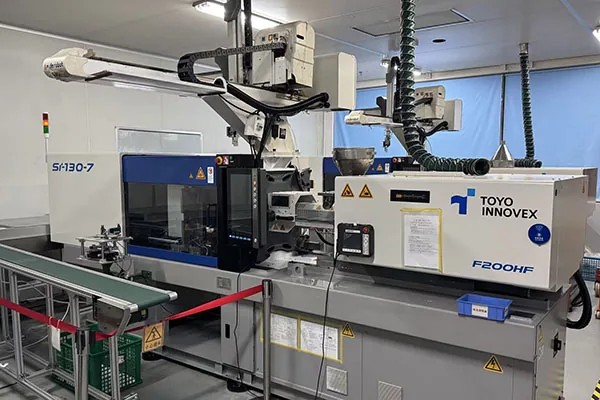
- Optical polycarbonate. PC is the lens material for its clarity and impact resistance, but it’s hygroscopic — it absorbs moisture that flashes to steam under injection pressure and ruins clarity. Our PC is dried from about 0.13% moisture down to around 0.05% before it enters the barrel. The lens lines run on all-electric Japanese machines, whose servo drives give tighter shot-to-shot repeatability than hydraulics — so the hundred-thousandth lens is as clear as the first.
- Mirror Coating. Applied in-house by vacuum deposition (PVD) as a stack of seven to nine interference layers, where many coaters stop at about five; more controlled layers mean higher, more durable reflectance.
- Anti-Fog. A proprietary nano hydrophilic coating, bonded into the lens after a plasma surface treatment raises the surface energy so the coating adheres rather than sits on top; in our testing it holds clear across more than 60 consecutive sessions, against single-digit sessions for a standard coating. A scratch-resistant hard coat (around 5H pencil hardness) is available where the program needs it.
- Ongoing R&D. The rest happens behind closed doors. We keep advancing the technology in the lab and hold the work confidential until it ships in a product.
How to tell real R&D from a spec sheet
“In-house R&D” is on every factory’s website. Here’s how a sourcing manager can check whether it’s real:
- Read the ISO 9001 scope, not just the logo. A real manufacturer’s certificate covers the manufacture of the product itself — “manufacture of swimming goggles,” in plain terms. A trading company’s often covers only “sales” or “trading.” The scope line tells you which one you’re talking to.
- Ask for test reports — actual model-specific reports with numbers, not a list of standards. Anyone can print ISO numbers; far fewer can hand you the report.
- Ask who produces the tooling. In-house tooling means fast iteration and tight precision control. Subcontracted tooling means a round-trip on every change.
- Ask the staff to walk the process. In a real development operation, people at several levels can explain the workflow consistently. Where R&D is a marketing claim, the explanations get vague fast.
- Look for evidence that problems are eliminated, not patched — patents, materials data, a design center, a test lab — rather than a catalog of other people’s shapes with a new logo.
The short version
Developing a swim goggle is a stage-gated path from a brief through industrial design, DFM engineering, scan-driven fit, prototyping and swimmer testing, mold development and trials, lab validation and certification, and the materials science underneath all of it. Running a mold is manufacturing; doing all of that is R&D, and the difference shows up in whether a factory can build the goggle you need rather than the one it already has. For how a goggle is then produced at scale, see how swim goggles are made; for the standard the lab tests against, what ISO 18527-3 actually tests; and for the sourcing models behind it, OEM vs ODM vs private label.
Related
Manufacturing
How Swimming Goggles Are Made
A walkthrough of how a high performance swim goggle is made
Learn More
Compliance
ISO 18527-3 Explained
ISO 18527-3 is the international safety and performance test standard for swim goggles and swim…
Learn More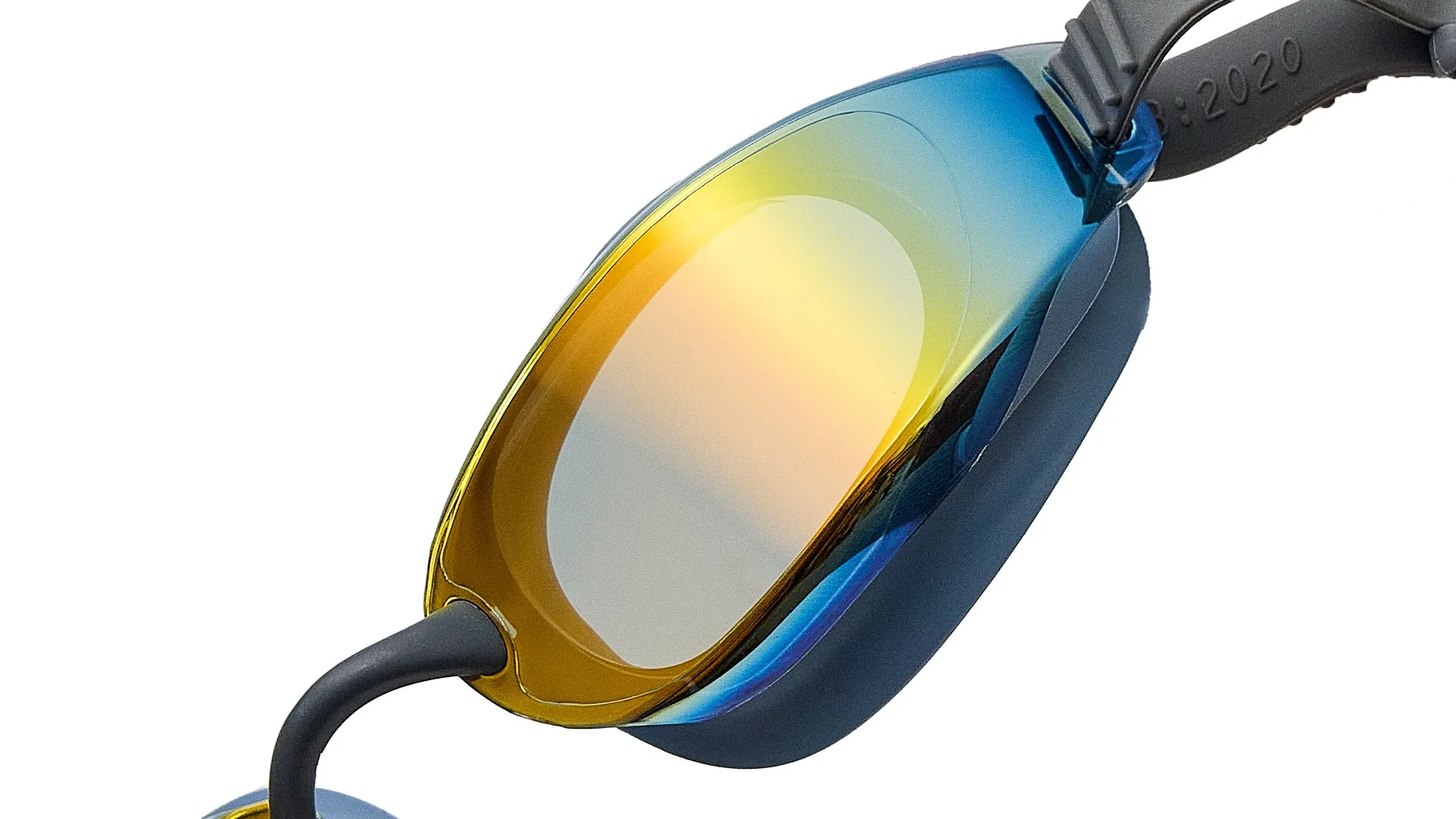
Buyer Guides
OEM vs ODM vs Private Label
OEM, ODM, and Private Label swim goggle programs cost differently, take different lead times,…
Learn More
Product
Zevo
Fitness Large
Learn More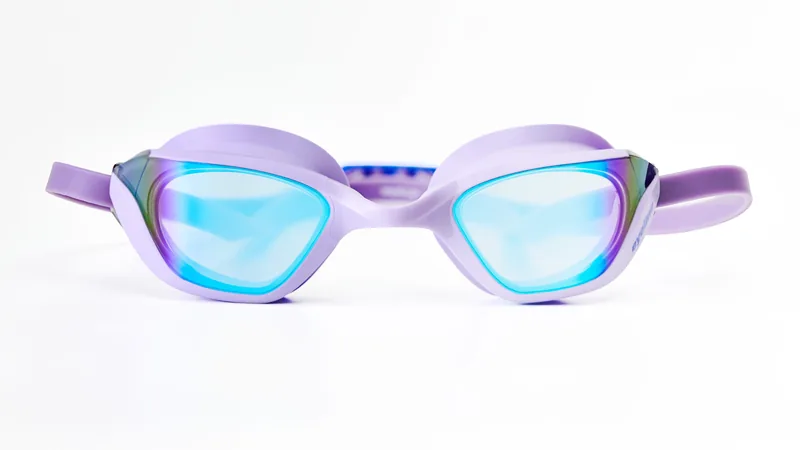
Product
Blade
Hybrid
Learn More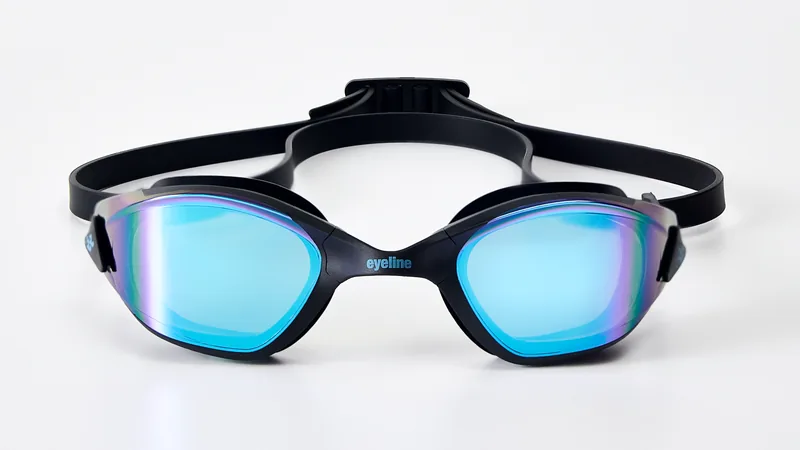
Product
Jetstream
Competition
Learn More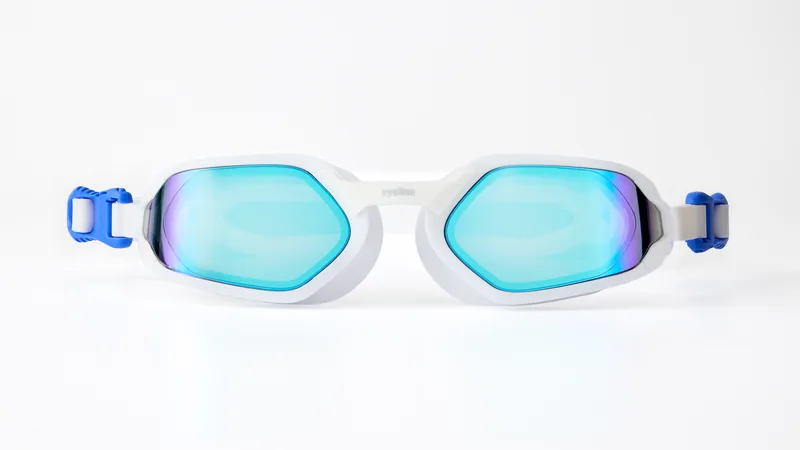
Product
Aquity
Corrective Lens
Learn More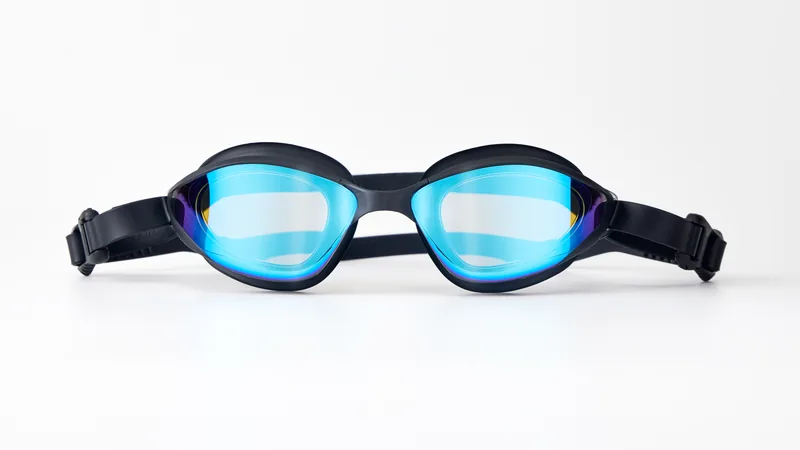
Product
Glide
Training Medium
Learn More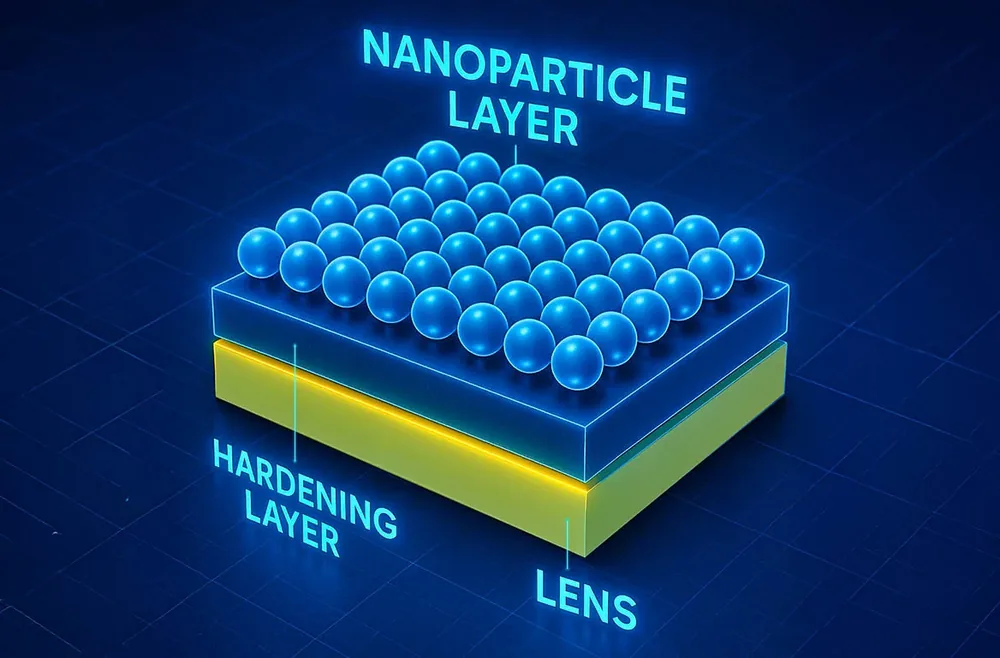
Technology
Anti-Fog
Long-lasting hydrophilic anti-fog coating.
Learn More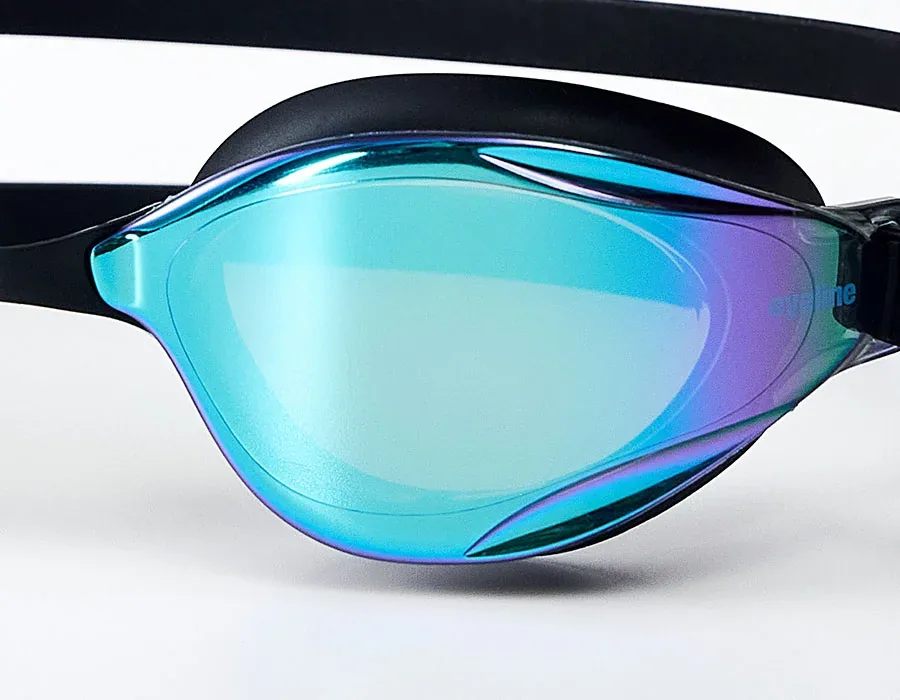
Technology
Mirror Coating
In-house PVD mirror coatings.
Learn More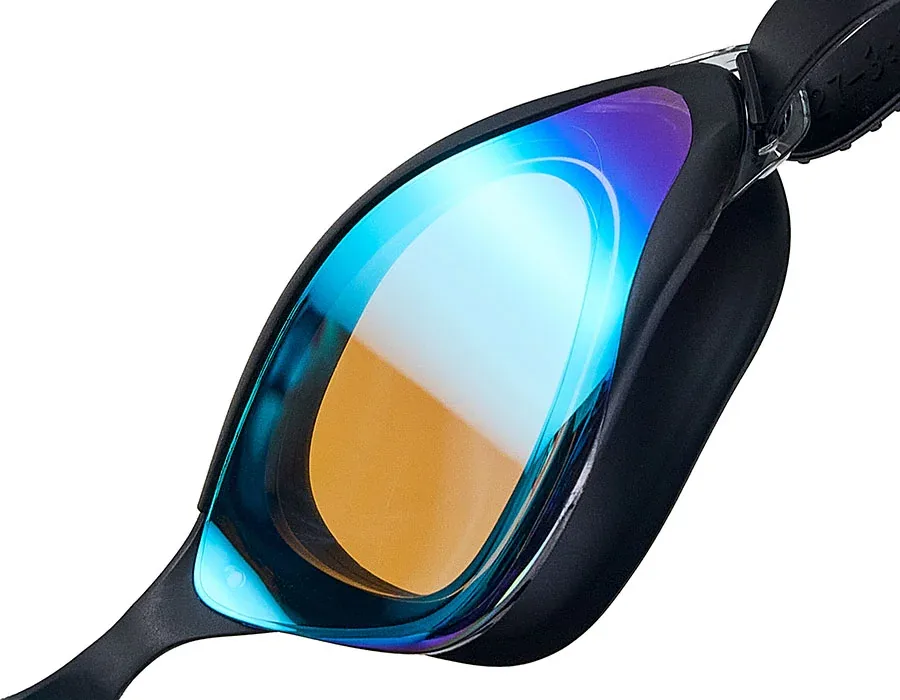
Technology
Wide Vision
Curved, distortion-free wide-vision lenses.
Learn More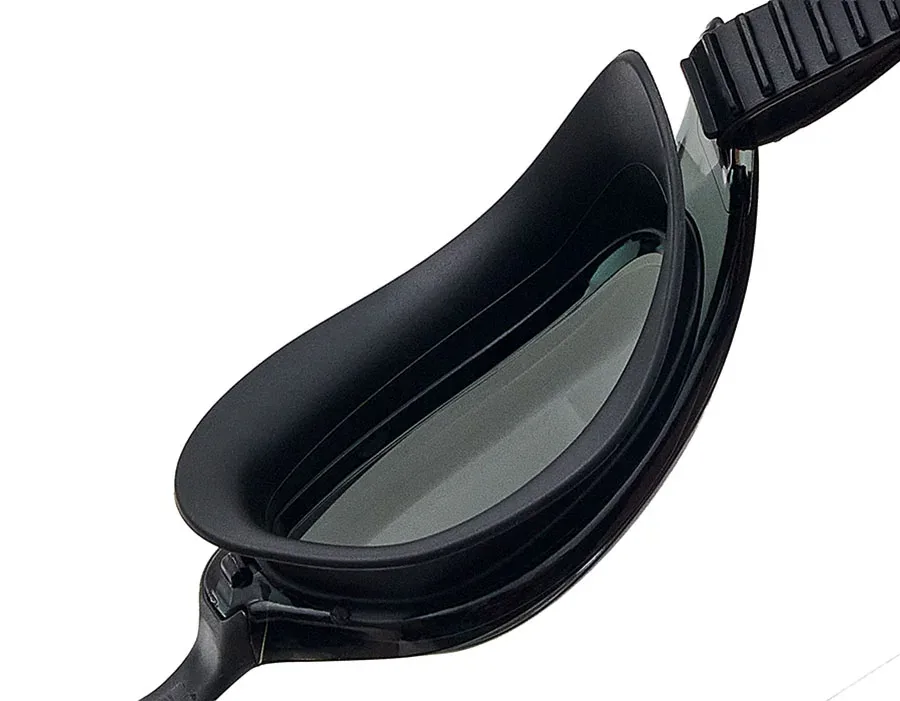
Technology
3D Sculpted Gaskets
Scan-shaped TPE gaskets for a secure, leak-free seal.
Learn MoreSourcing a swim goggle program?
We run OEM, ODM, and Private Label out of our own factory in Suzhou. Send the brief and the target volume and we’ll come back with a quote — or come walk the floor, virtually or in person.
Get in touch →