Custom Swim Goggles in Bulk: A Procurement Guide to Specs, MOQ, and Lead Times
Custom swim goggles in bulk is three decisions stacked: which existing mold you start from, what you change, and how many. A procurement guide that maps MOQ floors by customization lever, real tooling costs and amortization math, the lead-time stack from concept lock to first carton, and the complete spec sheet brand teams should bring to the first quote conversation.
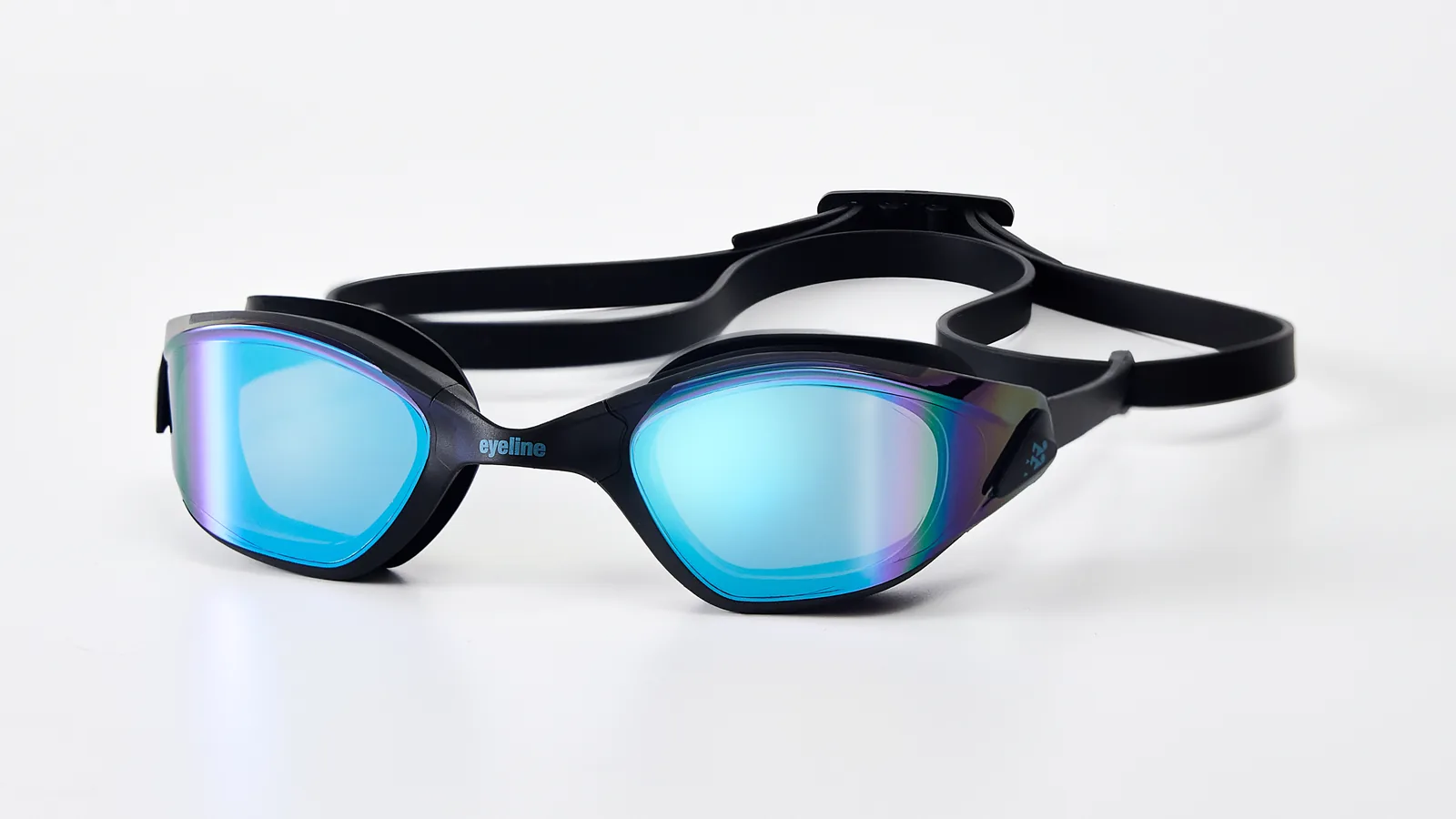
MOQs. The first question we get from a brand owner sourcing custom swim goggles in bulk is “what’s your MOQ?” It is a fair question. It is also the wrong opening question.
“MOQ” treats bulk-custom production as one thing. It isn’t. A bulk-custom swim goggle program is at least three separate decisions stacked on top of each other: which existing mold you are starting from, what you change about it, and how many you are committing to. Each layer has its own MOQ floor, its own lead time, and its own cost economics. Asking for “the MOQ” before settling those three layers produces a factory’s general-purpose answer instead of the answer that matches the program in front of you.
This guide is written for sourcing managers, brand founders, and product leaders running their first or second bulk-custom swim goggle program with a Chinese manufacturer. It is written from inside a swim goggle manufacturer that has been making goggles since 1963 — including OEM, ODM, and private-label programs for global swim brands across competitive, training, triathlon, and open-water swimming — and it covers the customization decision tree, the MOQ floors that go with each customization lever, real tooling cost ranges and amortization math, the lead-time stack from purchase order to first carton, the decoration choices that survive a full season in chlorinated pool water, the quality-control specifications that belong in the contract, and the spec sheet itself: the line items every complete custom swim goggles in bulk specification should contain.
It is the guide we wish more brand teams had read before sending the first quote request.
The customization decision tree
“Custom” means a lot of things in swim goggle manufacturing. Some of them cost a few hundred dollars to switch on and run from existing tooling at standard MOQ. Some of them require a five-figure tooling investment and a five-to-ten-month timeline to production. The cost difference between “custom” at the pigment-swap end and “custom” at the new-mold end is two orders of magnitude. Treating them as the same line item is where most first-time bulk-custom programs go wrong.
There are two levels.
Level 1 — No-tool customization
Changes that run on existing molds with no new fabrication. The factory mixes a different pigment, swaps a print plate, or applies a different mirror coating to an existing lens. These changes share the standard MOQ floor of the existing model and add no tooling cost. They cover most of what brand owners describe as “custom” in their first program:
- Lens color or tint from a swim goggle manufacturer’s standard solid-tint palette (typically around ten production-grade polycarbonate (PC) tints with built-in UV protection)
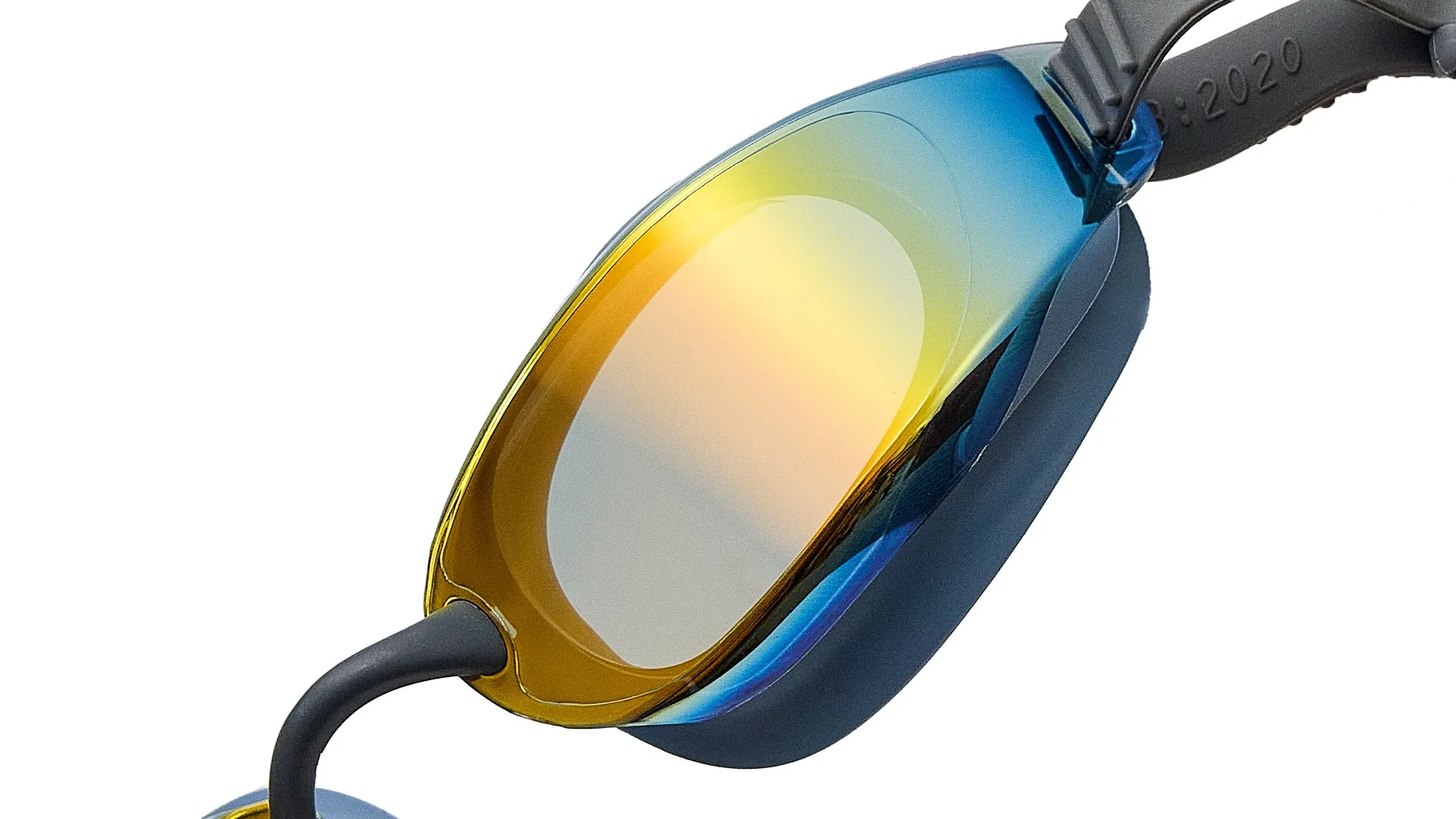
- Mirror coating from the factory’s standard mirror palette — silver and gold/blue (REVO) families, in full or light electroplating, for racing swim goggles and open-water use
- Frame color, strap color, gasket color — pigment swaps on existing geometry
- Logo decoration on existing surfaces — pad print on frame side covers, nose bridges, fingerboards, silicone straps, and buckles
- Packaging artwork on an existing box mold
- Anti-fog tier selection — standard FSI versus an upgrade to a higher-grade Nano anti-fog that prevents fogging across an extended swimming-pool service life
Level 1 customization is the right starting point for a first program, an Amazon FBA or Amazon-native launch, or a private-label test SKU. If your program can be expressed as a combination of Level 1 levers, you should not be paying for tooling.
MOQ by customization type — the actual floors
Once the customization levers are sorted, the MOQ floors are clean. They are not all the same.
Standard production MOQ on a custom swim goggles bulk order at our factory is 2,000 pieces per color per model at baseline pricing. That is the anchor. Every other MOQ floor below is either that number, a smaller number with a price multiplier, or a larger number tied to a tooling or material-economics constraint.
The surcharge ladder for runs below 2,000 pieces:
| Run size (per color per model) | Price multiplier |
|---|---|
| 2,000 pcs (standard) | ×1.00 |
| 1,200 pcs | ×1.04 |
| 600 pcs | ×1.09 |
| 300 pcs | ×1.15 |
| Below 300 pcs | Not accepted |
A small-order handling fee of US$300 applies on shipments under US$3,500 in total value. It is waivable when the customer arranges their own freight pickup.
Private-label entry (also called white-label) into the factory sits at 300 pieces per color — the bottom of the surcharge ladder. Catalog colors are available at every MOQ tier, which means a startup brand can launch on stock geometry with stock colors at 300 pieces under their own brand and graduate to standard MOQ pricing once volume justifies it.
Customization options at 2,000 MOQ per model per color:
- Lens tint or color from the factory’s standard solid-tint palette: 2,000 pcs per style (standard MOQ).
- Frame color, strap color, gasket color (pigment swap from the standard palette): 2,000 pcs per style.
- Mirror coating from the factory’s standard mirror palette: 2,000 pcs per style.
- Switching to a different silicone headband within our catalog (split-strap silicone, single-band silicone, dual-headband silicone on competition shells — every headband at our factory is silicone): 2,000 pcs per style.
Other:
- A custom Pantone color outside the factory’s standard palette: 15,000 pieces per year per color. The number is the masterbatch MOQ from our pigment supplier — a custom PC color requires a minimum masterbatch order from the supplier, and our factory pre-purchases that masterbatch and holds it in our inventory against your committed annual volume. Below 15,000 pieces a year per color, the masterbatch economics do not work. Above it, the program runs cleanly off held inventory with no per-PO dye trial.
- Logo decoration: two prints included as standard on every order. Additional prints, non-standard positions, and alternative decoration methods are quoted to spec. No separate MOQ floor for the prints themselves — they fall under the order’s MOQ.
- Prescription (Rx) swim goggle orders: not subject to the standard 2,000 MOQ. Quoted case by case because the diopter range and lens-changeover work is bench-time-driven, not unit-driven.
- New tooling (Level 2 customization): no fixed unit-volume MOQ on the order itself, but break-even economics drive the practical floor — see the tooling section below.
The two numbers most brand owners under-estimate are the new-Pantone floor and the standard MOQ on what feels like a “small” color tweak. A request for a “custom dark navy with a hint of teal” outside the factory’s solid-tint palette is not a 2,000-piece order. It is a 15,000-pieces-per-year commitment to a masterbatch the factory has to source and warehouse. Reframing that request around the factory’s catalog colors solves more bulk-custom programs than any other single move.
Level 2 — new-tool customization
A new mold spend, a new lead-time stack, and a meaningfully larger financial commitment. Level 2 work is what brand owners mean when they describe a “fully custom,” “exclusive,” or “private mold development” program. The mold spend buys geometry that nobody else can run; the brand owns the IP and, under most ownership structures, the tool itself.
- Bespoke frame geometry — a new lens mold and a new gasket mold tied to it.
- Custom gasket geometry for a new face profile on an existing lens.
- A standalone bespoke nosepiece mold for a customer-specific fit profile.
- A two-shot overmolded gasket on a new lens — heavier tooling because the second-shot cavity has to be matched to the lens mold.
- Junior or kids’ derivatives of an adult shell — a separate mold family. A child’s orbital ridge is shallower; the gasket profile flattens and the lens curvature tightens. The geometry does not scale, so the mold does not transfer.
- A new competition swim goggle platform with its own racing-specific gating, lens curvature, and gasket integration.
Almost every custom swim goggles bulk inquiry that hits a swim goggle manufacturer in China reads like a Level 2 ask when the program would actually run cleanly on Level 1 alone. A clean spec settles the question. We will come back to the spec sheet near the end.
Tooling costs and amortization — when a new mold pays back
For Level 2 customization, tooling cost and amortization shape the entire program. The numbers below are working ranges from our own published price book; tooling on a real program is always quoted against the geometry and cavity count on the drawing.
Tools are fabricated in our in-house mold shop using the highest quality steel to carry a 500,000-shot warranty and often make more than three million shots over their service life. We do not run aluminum production molds. Aluminum tooling has a place in industrial prototyping, but for a production swim goggle making millions of shots over a five-to-seven-year program life, the math runs toward steel.
Mold costs. Working tooling cost ranges by program tier. For information on mold cost ranges or estimates, please contact us. As a general rule, the amortization math is straightforward:
- Under about 30,000 pieces a year, share an existing tool. Pay the catalog price premium on tooling-shared SKUs and run on stock geometry. The unit economics beat custom tooling at this volume.
- Above about 50,000 pieces a year, custom tooling pays for itself in the first year. Once unit volume crosses the break-even threshold, brand-owned tooling buys lower unit cost, design exclusivity, and IP control for the rest of the program life.
The absolute numbers shift up as you climb into more complex tooling, but the break-even logic holds.
Mold ownership. A separate note on mold ownership. On our programs, brand owners can fund and own their tooling — the steel sits in our factory, runs only their orders, and physically belongs to them.
Three mold ownership structures show up in practice across the industry:
- Factory-funded open mold (the factory owns the steel and runs the catalog),
- Brand-funded brand-owned (the brand pays in full and owns the tool outright),
- Tooling amortized into the unit price (no separate tooling line; the factory carries the cost and recovers it in per-unit pricing on a committed volume floor).
Each structure has different cash-flow, exclusivity, and exit-cost implications. The right answer depends on how long the program is going to run and how much exclusivity the brand needs. The OEM versus ODM versus private-label guide covers the mold-ownership decision in more detail.
The lead-time stack — every week of a real bulk-custom program
Lead times are the single area where bulk-custom programs are most often under-planned. A custom swim goggles bulk inquiry that lands in mid-March, expecting a shipment in time for the European summer season, is usually a program that has not been spec’d yet — and a spec that has not been written is a spec that is not in production.
Headline timelines by program type:
- Private-label program on stock geometry (Level 1 customization only, 300–2,000 pieces): about 40–60 days from confirmed PO to first carton, on existing tooling.
- OEM program with one new mold (Level 2 customization on one component): 5–10 months from concept lock to first carton.
- Full ODM program (novel geometry, materials, or technology): 6–13 months for a standard ODM brief; 12–24 months for a brief with genuinely novel features (a new lens technology, an unproven materials substitution, a new construction method, patented innovations).
The numbers above assume a detailed design or product brief from the brand side — the design brief is complete, the artwork is final at the design lock stage, the color decisions have been made, and the brand product team is available for sample review in the same week the samples arrive. Specification ambiguity is the single biggest source of timeline slip. A bulk-custom program that adds three weeks of “let me check with marketing” between every sample round will add four to six months to its overall timeline, and the factory cannot fix that from its side.
A custom-color request outside the factory’s standard palette adds 2–3 weeks for the masterbatch trial and color sign-off on top of the production timeline — and that is the trial run; the dye-lot itself is held in the factory’s inventory once approved, so subsequent POs on the same color run on standard lead time. Brand owners with a fixed launch date who want a non-catalog color need to lock Pantone selection at the same time they are locking the geometry — not afterward.
Decoration that fits a bulk-custom run
Two decoration methods carry almost every custom swim goggles bulk program at the factory.
Pad print — the workhorse
Logo decoration on frames, nose bridges, fingerboards, silicone straps, and buckles — anywhere with curvature or a small printable area where a flat screen-print squeegee cannot reach. Our pad-print fleet includes 5-head rotary machines for multi-color jobs (up to three spot colors in a single pass) on Pantone-matched spot inks. The right ink chemistry on the right substrate, post-cured, holds up to chlorinated pool water across a full swimming-pool service life.
Two pad-print logo positions are included as standard on every order. Additional positions, larger-area artwork, or non-standard substrates are quoted to spec.
Laser marking — for permanent technical marks
Batch codes, cavity marks, size indicators, CE and UKCA compliance marks, and per-unit serialization. The mark is permanent — it discolors the substrate rather than depositing pigment on it — and it cannot peel under chlorine because there is no surface coating to fail. Laser marking is single-color by definition (substrate contrast, not pigment), and it works on PC frames and ABS/PP buckles.
Quality and inspection that should be in the contract
A purchase order without a written quality control (QC) specification is a purchase order that gets inspected to the factory’s standard, not the brand’s. The inspection sheet a buyer signs off before the first container ships is the most leveraged document in the whole bulk-custom program.
The QC framework on a clean custom swim goggles bulk contract:
- Cosmetic defects: AQL 2.5 Level I sampling per ANSI/ASQ Z1.4. The major/minor split is where most brand specs go silent. A lens scratch over a defined visible-at-arm’s-length threshold is a major. A buckle that requires two hands to release where the spec calls for one is a minor. Lock the threshold definitions in the contract — they are easier to enforce before the carton seals close than after the goggles land in the destination market.
- Functional inspection: 100% on lens optics, anti-fog adhesion, and mirror coating adhesion. Every goggle is inspected, not just a sample. Functional defects fail the goggle outright at the line.
- Pre-shipment inspection: Eyeline runs an internal PSI on every shipment as standard. Customer-side and third-party PSI (Bureau Veritas, SGS, Intertek, QIMA) are welcomed; a customer-mandated third-party PSI cost is borne by the customer.
- Certifications backing the production line: ISO 9001 (quality management), ISO 14001 (environmental), ISO 45001 (occupational health and safety), plus EU REACH and California Prop 65 restricted-substances compliance. The product standard is EN ISO 18527-3 (the EU-harmonised version of ISO 18527-3) — the PPE Category I swim goggle standard that backs the CE Declaration of Conformity, UKCA marking, FDA registration, and EU GPSR compliance. The factory carries an SLCP A-rating on its social-compliance audit and WCA audit certification.
The right QC clause in a bulk-custom contract names the sampling plan (ANSI/ASQ Z1.4 Level I), the AQL (2.5 cosmetic, 0 on functional defects), the major/minor threshold definitions, the PSI scope, and who pays for third-party verification if the customer wants it. That clause is short. It is the difference between a clean shipment and a dispute.
The complete spec sheet — what every line item should contain
Here is the spec sheet we wish more brand owners brought to the first call. The sections below are line items — every one of them needs an answer. The answers do not have to be technically correct on day one; they have to be specific enough that the factory can quote.
Program identification
- Brand name, program name, target launch date
- Sales channel (retail, e-commerce, club, premium, gift)
- Target retail price band
- First-year unit volume forecast, by SKU
- Three-year unit volume forecast (for tooling break-even math)
Geometry
- Existing model number you are starting from, or target face fit (adult, junior, kids, mask) and use case (recreational, training, lap swimming, racing, competition, triathlon, open-water)
- Gasket profile family (C-Profile, Ultra-Large, L-Profile)
- Whether the gasket is overmolded or separately assembled, and the gasket material. Most of our platforms run TPE overmolded gaskets; we also run silicone gaskets on a small number of platforms — including the Aqua Silicon and Aquarius Silicon — where the program brief calls for that material.
- Strap architecture (split-strap silicone, single-band silicone, dual silicone on competition shells — all our straps are silicone)
- Buckle type
- Nosepiece configuration (three-piece standard, five-piece competition)
- Lens curvature target (flat, spherical, toric, compound-radius for peripheral vision — the wide-vision lens geometry page covers the trade-offs)
Optics
- Lens tint by Pantone (or by the factory’s standard solid-tint palette)
- Lens VLT target if known (training, racing, open water, mirror)
- Mirror coating family (silver, REVO)
- Mirror coating intensity (full or light electroplating)
- Anti-fog tier (standard FSI, Nano)
- UV protection class (ISO 18527-3 reference)
Color
- Frame color (Pantone reference; specify catalog or new masterbatch)
- Strap color
- Gasket color
- Catalog-color confirmation versus new-color request
Decoration
- Number of pad-print positions (two included; specify if more)
- Pad-print artwork files (vector, with Pantone spec)
- Required laser marks (CE, UKCA, batch code, cavity mark, serial number)
Packaging
- Box type (PP, PC, custom — and whether you are bringing the box mold or running on standard)
- Packaging artwork (vector)
- Carton size, units per carton, units per pallet
- Polybag, instruction sheet, warranty card requirements
- Hangtag and shelf-display requirements
Compliance markings
- Target markets (US, EU, UK, AU, JP, KR, CN)
- Required marks (CE, UKCA, FDA, AS/NZS, GPSR responsible economic operator / responsible-person info)
- Country-of-origin label requirements
Quality
- Sampling plan (ANSI/ASQ Z1.4 Level I default)
- AQL for major and minor cosmetic defects (2.5 / 4.0 default)
- Functional inspection scope
- Pre-shipment inspection requirement (factory PSI, customer PSI, third-party lab)
- Third-party lab (Bureau Veritas, SGS, Intertek, QIMA — if required)
Commercial
- Incoterm (FOB Shanghai default)
- Payment terms (30% deposit / 70% balance before shipment is the factory standard)
- Lead time committed in the PO
- Penalty clauses for late delivery
- Warranty period from customer’s receipt
- Defect-claim window from customer’s receipt
Tooling (if Level 2)
- Tooling ownership structure (factory-owned, brand-owned, refundable deposit, amortized in unit price)
- Tool storage and maintenance responsibilities
- Tool relocation rights and conditions
- Tool lifecycle (refresh and replacement triggers)
The spec sheet is not a contract. It is the document the contract is written against. When the spec sheet is complete and signed off — by the brand and the factory — the program has a real chance of running to schedule. When the spec sheet is incomplete and gets filled in mid-program, the program slips by exactly the duration of the unanswered questions.
A useful companion document: the sourcing guide for choosing a swim goggle manufacturer — what to verify about the factory before the spec sheet conversation starts.
Common procurement mistakes to avoid
Five patterns explain most of the bulk-custom programs that go wrong.
- Treating “custom” as a single decision instead of a layered one. A custom color is a different conversation from a custom mold. A custom logo is a different conversation from a custom gasket. The spec sheet above is one way to enforce the distinction. Quoting custom swim goggles in bulk without the spec sheet attached produces a number that does not match the program.
- Asking “what’s your MOQ?” before settling the spec. The MOQ depends on which lever you are pulling. The factory cannot quote a single MOQ for “custom” any more than it can quote a single price for “a goggle.” Walk the spec sheet first; the MOQ falls out of it.
- Under-budgeting tooling lead time. A new-mold program is a 5-to-10-month timeline from concept lock to first carton. The brand teams that consistently hit launch dates are the ones that started the tooling conversation at the same time they were writing the brand brief, not the ones that locked the brief and then started talking to factories.
- Letting the factory choose what is not spec’d. Any line item not in the spec sheet gets the factory’s default. Defaults are usually fine — but if the brand has a strong preference on gasket durometer, ink chemistry, or carton labeling, leaving it unspec’d means accepting whatever the factory’s standard is on that production batch. Write the preference into the spec.
- Trusting verbal commitments at trade shows or factory visits. Verbal MOQ promises, verbal price promises, verbal surcharge waivers — none of these are binding unless they are captured in a written quotation, sales contract, or order acknowledgement. This is true at every credible swim goggle manufacturer in China, not only Eyeline. The factory’s signature on a written document is the only thing the brand can hold them to.
Pick a swim goggle manufacturer with the production capability the program needs, write a complete spec sheet against their actual catalog, choose the customization level the program can support, and sequence the tooling and material commitments against the launch date. The bulk-custom programs that work are the ones that did this homework before the first PO. The programs that struggle are the ones that did not.
If you have a custom swim goggles bulk program in the planning stage and want a working session with a vertically integrated, one-stop swim goggle manufacturer in China — our factory in Suzhou, Jiangsu (Yangtze River Delta) has been running swim goggle production for global swim brands serving customers worldwide across competitive, training, triathlon, and open-water programs for decades, and we are happy to walk you through the spec sheet against our catalog — the contact line is below.
ODM, OEM, and private-label inquiries — [email protected]
Related
Buyer Guides
OEM vs ODM vs Private Label
OEM, ODM, and Private Label swim goggle programs cost differently, take different lead times,…
Learn More
Buyer Guides
Choosing a Manufacturer
A sourcing guide to choosing a swim goggle manufacturer: the vocabulary, the…
Learn More
Buyer Guides
Factory Audit Checklist
A seven-question audit checklist for sourcing a swim goggle manufacturer
Learn More
Product
Aqua
Training Medium
Learn More
Product
Blade
Hybrid
Learn More
Product
Vortex
Training Small
Learn More
Product
Panora
Mask
Learn More
Technology
Anti-Fog
Long-lasting hydrophilic anti-fog coating.
Learn More
Technology
3D Sculpted Gaskets
Scan-shaped TPE gaskets for a secure, leak-free seal.
Learn More
Technology
Wide Vision
Curved, distortion-free wide-vision lenses.
Learn More
Technology
Mirror-Coating
Inside our swim goggle technology.
Learn MoreSourcing a swim goggle program?
We run OEM, ODM, and Private Label out of our own factory in Suzhou. Send the brief and the target volume and we’ll come back with a quote — or come walk the floor, virtually or in person.
Get in touch →